How to Prevent Micro-Scratches When Cleaning Matte PPF Surfaces
Wash your matte PPF by hand using the two-bucket method with grit guards to trap dirt. Use a pH-neutral, matte-safe shampoo with non-ionic surfactants and a pH between 6.5 and 7.5. Clean with a 300–400 GSM microfiber mitt and rinse it frequently in the dedicated rinse bucket. Dry with a plush 300 g/m² microfiber towel folded into quarters. Avoid automatic washes and abrasive tools. Keep your supplies clean. You’ll maintain surface integrity and avoid swirls with proper technique. Further details reveal even greater control over finish preservation.
Notable Insights
- Use the two-bucket method with grit guards to prevent abrasive particles from contacting the matte PPF surface.
- Choose a pH-neutral, matte-safe car shampoo with non-ionic surfactants to protect the polymer layer.
- Wash from top to bottom and frequently rinse the microfiber mitt in the dedicated rinse bucket.
- Avoid automatic car washes that use high pressure or dirty brushes, which can cause micro-scratches.
- Dry with a high-quality microfiber towel using a folding technique to maintain a scratch-free surface.
Wash Matte PPF by Hand Using the Two-Bucket Method
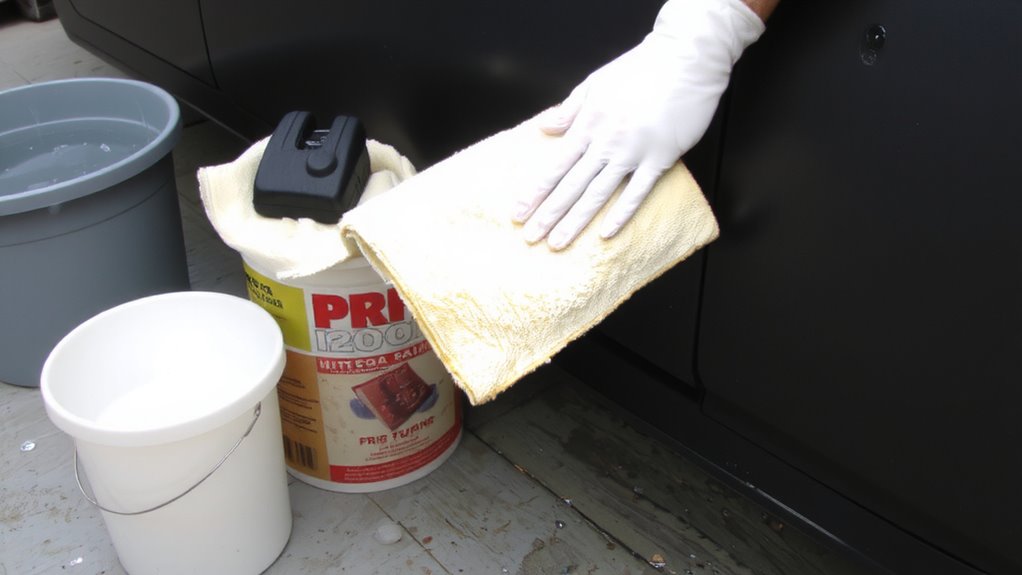
When washing matte paint protection film (PPF), starting with the right technique makes all the difference-use the two-bucket method to minimize the risk of transferring grit and contaminants back onto the surface. Proper technique prevents micro-scratches that compromise finish integrity. One bucket holds clean, pH-balanced wash solution; the other is dedicated to rinsing your mitt. This system guarantees dirty water and suspended particles don’t recontact the film. Microfiber mitts with 300–400 GSM density trap contaminants effectively. Bucket organization is critical: use grit guards in both containers to settle debris below agitation level. Begin washing from the top down, rinsing the mitt frequently. Never wipe when dry-always work with lubricated surfaces. Each pass should use clean solution, reducing shear forces that degrade matte textures. Following this protocol preserves optical clarity and surface uniformity. For added long-term protection against surface defects, consider applying a ceramic coating kit after cleaning.
Use pH-Neutral Soap to Avoid Damaging Matte PPF
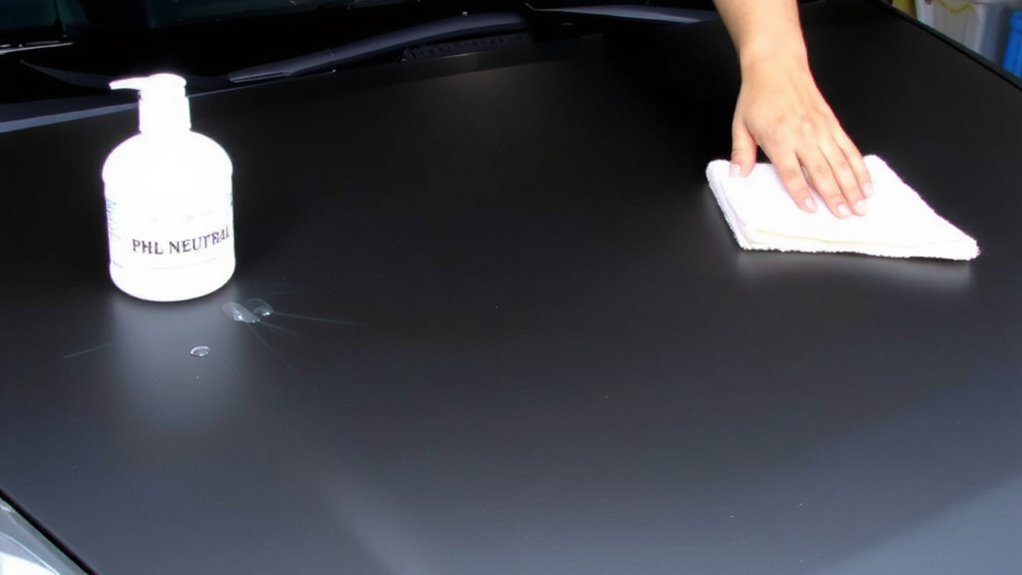
Since using the wrong soap can permanently alter the appearance of matte PPF, always choose a pH-neutral car wash solution with a ph between 6.5 and 7.5. Maintaining proper pH balance is critical-alkaline or acidic cleaners degrade the polymer layer, leading to gloss spots or hazing. A pH-balanced formula guarantees soap safety, preserving the film’s texture and finish. These specialized soaps contain non-ionic surfactants that lift dirt without aggressive chemical reactions. Avoid household detergents; they often fall outside the safe pH range and contain additives that compromise PPF integrity. Use only soaps labeled specifically for matte finishes or paint protection films. Their formulation prevents residue buildup and minimizes surface tension, improving water flow during rinse. Confirm compatibility with your PPF manufacturer’s recommendations. Consistent use of pH-neutral soap extends the film’s lifespan and maintains its original satin appearance, protecting your investment with every wash. For optimal results, consider using a Best Car Paint Protection Film that is specifically engineered to resist micro-abrasions during cleaning.
Dry With Plush Microfiber Towels: Never Standard Cloths
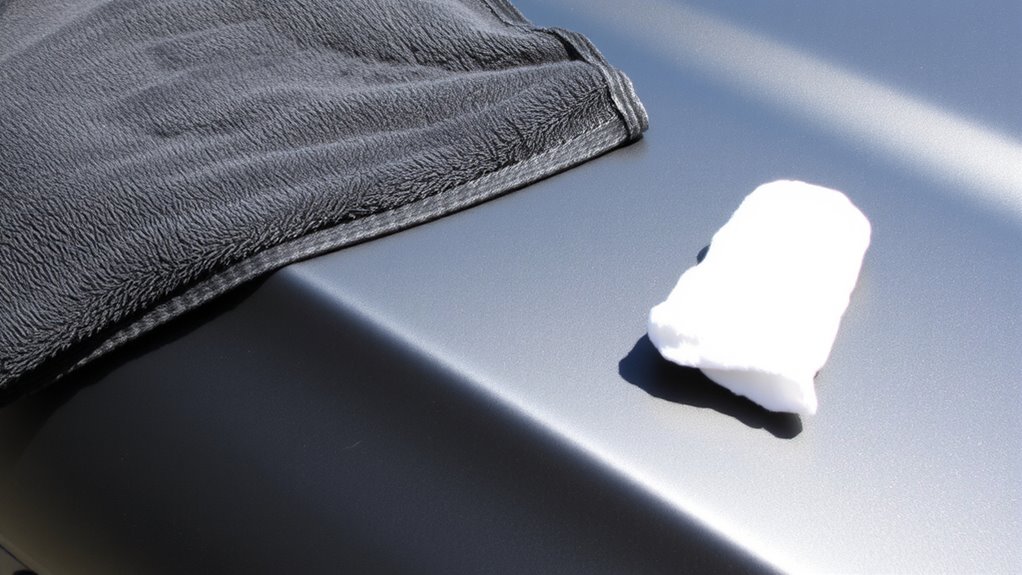
Though drying might seem like the final, simple step, using anything less than a plush microfiber towel risks introducing fine scratches that compromise the integrity of matte PPF. Standard cloths, including cotton or terry, contain abrasive fibers that easily mar the soft matte surface. Plush microfiber towels with a minimum 70/30 polyester-polyamide blend and 300 g/m² density are ideal for safe, effective drying. Plush drying guarantees maximum water absorption without dragging contaminants across the film. Always fold the towel into quarters to maintain a clean drying surface and reduce friction. Towel care is critical-machine wash after every use in warm water without fabric softener. Residue and worn fibers degrade performance. Replace towels if linting or reduced absorbency occurs. Use separate towels dedicated only to drying. This strict protocol preserves finish clarity, guarantees scratch-free results, and extends PPF lifespan. For optimal results, choose from the best microfiber towels for car care.
Skip Automatic Car Washes: They Scratch Matte Finishes
Automatic car washes might seem convenient, but they’re a hazard for matte PPF. Brushes accumulate grit, which abrades the textured surface, creating micro-scratches that diffuse light and ruin the finish. Even touchless car washes aren’t safe-they often use high-pressure nozzles exceeding 2,000 psi, forcing dirt into the PPF’s microvalleys. These systems also rely on harsh detergents that degrade adhesive layers over time. Instead, wash by hand using a dedicated matte-safe shampoo. Use foam cannons set to 30–45 psi with a 1.5mm nozzle to evenly apply lubricant without impact. This low-pressure method lifts contaminants gently, preserving the finish. Always pre-rinse to remove loose debris before foaming. Automatic systems lack control and consistency, making them unsuitable for matte surfaces. Your PPF’s longevity depends on avoiding unmonitored, abrasive cleaning methods. Stick to soft tools and precise techniques.
Never Polish or Buff Matte PPF: It Causes Swirls
Polishing is the enemy of matte finish integrity. You introduce surface abrasion every time you polish, disrupting the carefully engineered texture of matte PPF. Unlike glossy films, matte PPF relies on a uniform micro-etched surface to scatter light and prevent shine. Polishing, even with low-abrasion compounds, removes material unevenly, creating swirl patterns that reflect light differently. This leads to visible finish degradation, especially under direct sunlight or LED lighting. Most matte PPFs are rated to 8–12 mils thick; aggressive polishing can remove 1–2 mils per session, drastically shortening lifespan. Buffing generates heat, further distorting the surface structure. Microfiber pads and compounds designed for gloss finishes are too aggressive. There’s no approved polish by manufacturers for matte PPF. Repairing swirls requires professional re-coating. Avoid polish altogether-preservation beats correction.
Clean Matte PPF Weekly to Prevent Buildup
Skipping polish protects your matte PPF from swirls, but regular cleaning keeps it free from contaminants that compromise its appearance and durability. You must maintain schedule to prevent accumulation of grime, which can degrade the film over time. Wash weekly using pH-neutral car shampoo and a clean microfiber mitt. Rinse thoroughly with low-pressure water to avoid forcing debris into the surface. Dry with a dedicated matte-safe microfiber towel to minimize micro-scratch risk.
| Week | Task | Purpose |
|---|---|---|
| 1 | Rinse thoroughly | Loosen particulates safely |
| 2 | Wash with pH-neutral soap | Prevent film degradation |
| 3 | Dry with soft towel | Eliminate water spots, micro-scratches |
| 4 | Inspect surface | Detect contamination early |
Consistent cleaning preserves optical clarity and film integrity without introducing defects.
Avoid Abrasive Tools and Dirty Cleaning Supplies
Even one poorly chosen wipe can compromise the integrity of your matte PPF, so always use tools specifically designed for matte finishes. Avoid abrasive sponges, brushes, or cloths with coarse textures-they cause micro-scratches that diffuse light and create shine spots. Instead, use wash mitts made from ultra-soft microfiber, at least 300 g/m² density, to safely lift dirt without marring the surface. Soft bristles on wheels or trim brushes prevent collateral damage along panel edges. Never reuse dirty mitts; trapped grit acts like sandpaper under pressure. Pre-rinse vehicles thoroughly to remove loose debris before contact washing. Use separate, dedicated clean mitts for wheels and paint to avoid cross-contamination. Machine-wash cleaning tools after every use with no fabric softener, which degrades fiber integrity. High-quality applicators with smooth, snag-free stitching guarantee uniform pressure distribution, minimizing friction risks on sensitive matte coatings.
On a final note
You must clean matte PPF by hand using the two-bucket method with pH-neutral soap to preserve the finish. Microfiber towels with 70/30 polyester/nylon blend dry safely. Automated car washes exceed 3,000 psi and cause micro-marring. Polishing creates swirls by altering the textured surface. Clean weekly to prevent bonded contaminants. Use only clean, grit-guard-equipped buckets and non-abrasive tools rated below 2 on the Mohs scale.