Why Some OEMs Require Specific Wheel Specifications for Warranty Coverage
Your vehicle’s warranty depends on using factory-specified wheel dimensions because OEMs design braking, suspension, and stability systems around exact tolerances. Even a 5mm offset change or 0.5-inch diameter deviation can trigger failure or void coverage. Wheels must meet load ratings of 1,500–2,500 lbs and maintain proper bolt pattern and hub bore. Sensor-calibrated systems rely on stock rolling diameter for accuracy. Stay within specs to avoid costly claims denial-knowing which modifications stay compliant protects your investment and reveals what’s really at stake.
Notable Insights
- OEMs require specific wheel specs to maintain factory-calibrated safety and performance systems.
- Deviations in size or offset can disrupt suspension geometry and cause premature component wear.
- Wheel load ratings must match or exceed OEM standards to prevent structural failure risks.
- Incorrect rolling diameter affects speedometer accuracy, transmission shifts, and ECU function.
- Non-compliant wheels void warranty due to increased risk of braking, handling, and safety system failures.
Why OEM Rules Make or Break Your Warranty
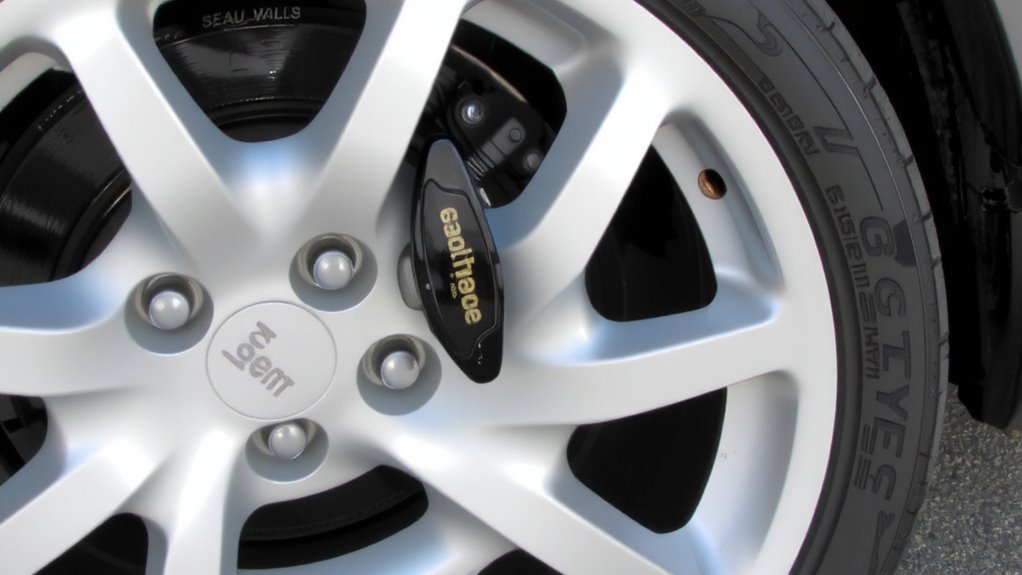
While you might think upgrading your wheels improves your vehicle’s performance, using non-OEM-spec wheels can void your warranty in seconds. Manufacturers design systems to work within precise tolerances, and deviations risk critical failures. Non-OEM wheels often alter brake compatibility, affecting caliper clearance, rotor size, and sensor alignment. Even minor discrepancies disrupt the ABS and traction control systems. Tire compound matters because OEMs calibrate suspension and stability systems to specific grip levels. Aftermarket tires with incompatible compounds compromise handling and safety. Wheel offset, bolt pattern, and load rating must match OEM specifications exactly. A 5mm offset change increases suspension wear. Incorrect diameter wheels disrupt speedometer calibration and transmission shift points. Automakers validate performance using factory specs-deviate, and you assume all risk. Warranty claims are denied over such modifications. Precision matters. Your warranty hinges on it.
Bigger Wheels, Bigger Problems: Size and Warranty Risks
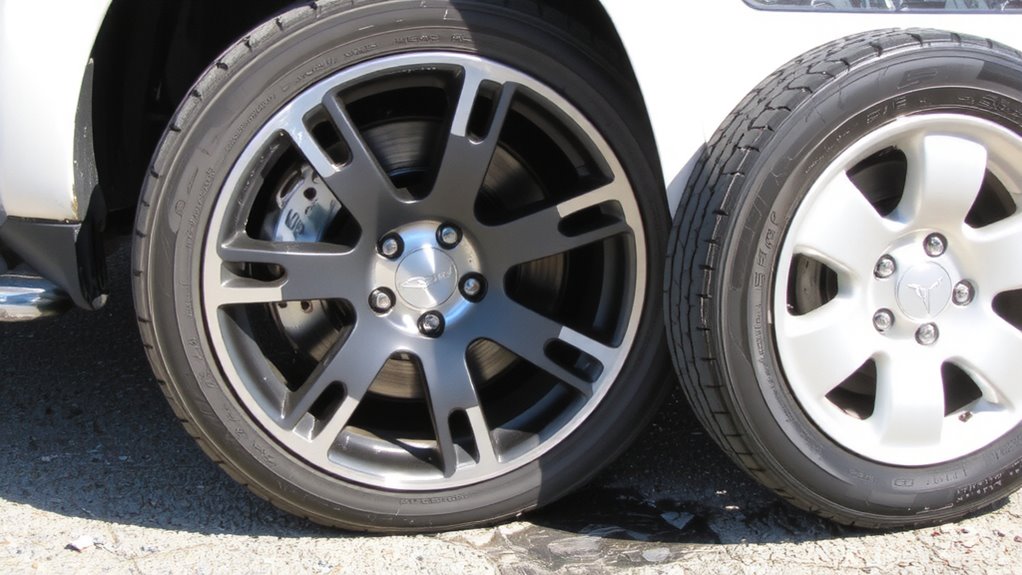
A millimeter too large, a fraction off-center-wheel size mistakes trigger warranty trouble fast. Automakers design suspension, braking, and safety systems around specific wheel diameters and widths. Deviating voids coverage. Increasing wheel diameter beyond OEM specs reduces tire sidewall height, compromising ride comfort and impact absorption. Larger wheels add unsprung weight, straining suspension components not engineered to handle it. Exceeding approved tire width alters clearance, risking interference with fenders or suspension arms during steering or compression. Even slight deviations affect speedometer calibration and traction control operation. Your vehicle’s ECU relies on precise sensor input tied to stock rolling diameter. A 20mm wider tire or 1-inch larger wheel disrupts this balance. Stick to factory specs-typically within ±0.5 inches in diameter and ±10mm in tire width-to maintain warranty protection and guarantee peak ride comfort. Enthusiasts seeking upgrades can explore pre-engineered solutions like Best Wheel and Tire Packages that maintain factory specifications while enhancing performance and aesthetics.
Offset Mistakes That Trigger Warranty Denials
Even a small miscalculation in wheel offset can jeopardize your warranty. An offset mismatch alters the wheel’s position relative to suspension components, causing improper fitment. This leads to premature wear on bearings, bushings, and control arms-problems manufacturers won’t cover. You might not notice immediate handling changes, but internal stress accumulates over time, mimicking factory defects. OEMs design suspension geometry with precise load paths; deviating invalidates their engineering assumptions.
| Offset Range | Risk Level | Common Consequence |
|---|---|---|
| +35 to +45 mm | Low | OEM-aligned performance |
| +25 to +34 mm | Moderate | Slight tire rub, minor misalignment |
| < +25 mm | High | Severe improper fitment, warranty denial |
Always verify your vehicle’s specified offset. A change of just 5 mm beyond tolerance triggers an offset mismatch, and warranty claims get denied-no exceptions.
Load Rating: The Hidden Warranty Requirement
One wrong load rating can void your warranty-manufacturers require wheels to support specific weight capacities, and skipping this detail risks costly denials. Load capacity isn’t just about the wheel; it’s a system-wide specification tied to your vehicle’s gross axle weight rating (GAWR). Each wheel must meet or exceed the OEM’s load index, typically ranging from 1,500 to 2,500 pounds per wheel for passenger vehicles. Undersized wheels deform under stress, leading to cracks, blowouts, or suspension damage. You must also guarantee tire compatibility-your tire’s load rating must match the wheel’s capacity and the vehicle’s requirements. Mismatched components disrupt weight distribution, increasing wear and failure risk. Think of it like a chain: the weakest link breaks first. Always verify both wheel and tire load ratings against the manufacturer’s door jamb sticker or owner’s manual. Ignoring this could mean denied claims-even if damage seems unrelated.
What Happens If Your Wheels Void the Warranty
What do you risk when aftermarket wheels don’t meet OEM specs? You risk denied warranty claims and outright repair denials. Manufacturers design vehicles around precise wheel dimensions-offset, load rating, bolt pattern, and diameter. Deviations compromise safety and performance. If your wheels lack the required load rating-say, less than the OEM-specified 1,500 lbs per wheel-tire and suspension failures may occur. The automaker can then refuse coverage, citing unauthorized modifications. Mismatched bolt patterns or incorrect offset alter steering geometry and strain hub components. Even minor variances accelerate wear. When you file warranty claims for suspension or drivetrain issues, dealers inspect wheel compliance. Non-compliant wheels mean repair denials-even for unrelated repairs like engine faults. Automakers use strict criteria because wheel deviations impact vehicle dynamics like a misaligned keel on a ship. Protect your investment: use wheels that meet factory specifications exactly.
Custom Wheels Without Losing Coverage: How
While you can customize your wheels without voiding your warranty, it’s critical to match OEM specifications exactly. Your new wheels must have the correct bolt pattern, typically 5×114.3mm or 5x120mm, depending on your vehicle. A mismatched bolt pattern causes improper fitment, leading to vibration, uneven wear, and safety risks. Offset and hub bore diameters must also align-usually within ±5mm of OEM. You can choose a custom finish, like matte black or chrome, as long as structural integrity isn’t compromised. Alloy composition must meet or exceed factory tensile strength ratings-minimum 280 MPa. Load ratings should support your vehicle’s GVWR. Any modification affecting suspension geometry or tire diameter invalidates coverage. Stick to factory specs, verify every dimension, and document all parts. This way, you maintain warranty protection while personalizing your ride. High-quality wheel spacers can help maintain proper fitment when using non-OEM wheels, provided they are ISO-certified and correctly sized.
On a final note
Your wheel choice directly impacts warranty coverage. OEMs require specific sizes, typically 16 to 20 inches, to maintain proper speedometer calibration and suspension geometry. Incorrect offset-beyond ±5mm of spec-causes uneven wear and alignment issues. Load ratings must meet or exceed the vehicle’s GVWR requirements, usually 1,400–2,200 lbs per wheel. Deviations void coverage on drivetrain and suspension components.