How Different Types of Polishing Compounds Can Affect Paint Finish Quality
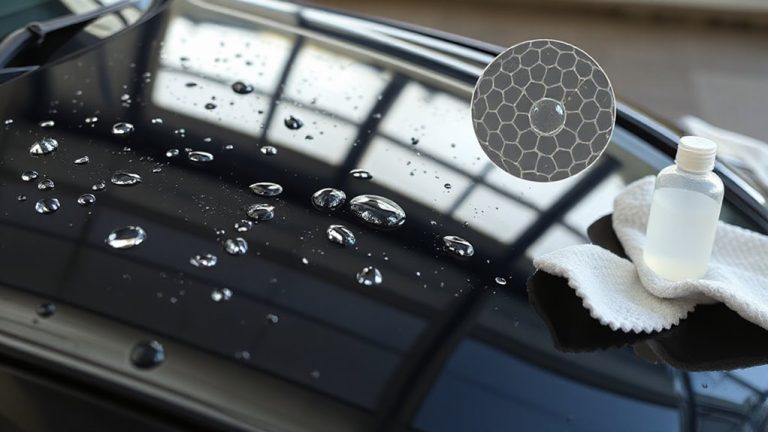
Your choice of polishing compound directly impacts paint gloss and clarity by controlling abrasion level and surface smoothness. Heavy-cut compounds with 8–12 micron abrasives remove 15–25 microns of clear coat to fix deep scratches but risk marring. Finer compounds use diminishing silica particles below 2 microns to refine surfaces, removing just 0.1–0.5 microns per pass. A smooth, high-gloss finish requires average surface roughness below 0.5 microns Ra. You’ll discover how to match compounds to defect depth and paint thickness for best results.
Notable Insights
- Heavy-cut compounds remove deep scratches but may leave swirls if used improperly on thin or soft paint.
- Medium polishes balance defect removal and refinement, ideal for moderate oxidation and light marring.
- Fine and ultra-fine polishes enhance gloss by eliminating residual swirls with minimal material removal.
- Diminishing abrasives self-adjust during use, reducing marring risk while maintaining consistent cut efficiency.
- Proper compound selection based on paint thickness and defect type ensures finish quality and longevity.
How Polishing Compounds Transform Paint
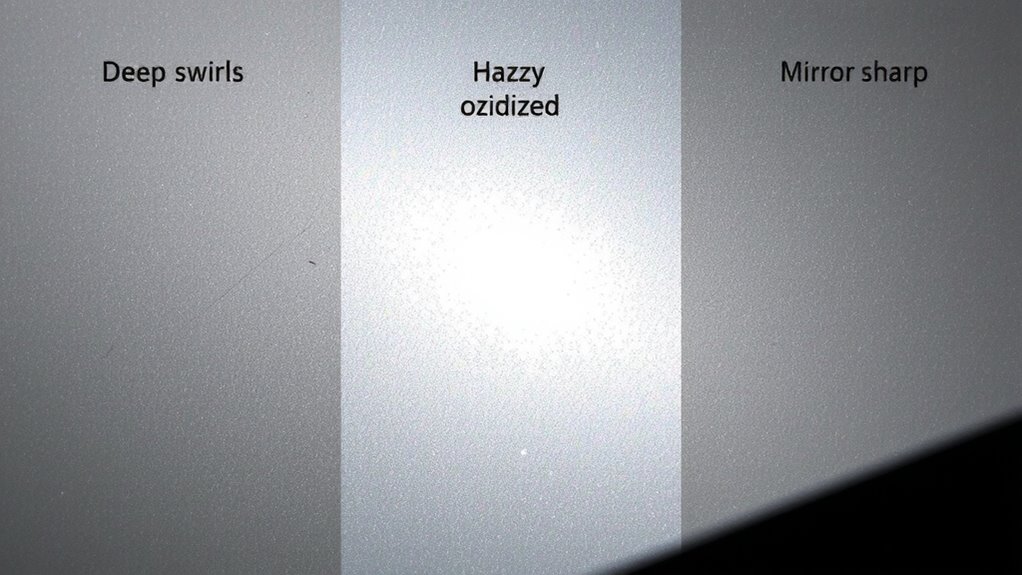
While you might think a scratched paint surface needs a full repaint, polishing compounds can often restore it to near-original condition. Paint rejuvenation is achieved through carefully engineered abrasives that remove light defects. Surface refinement occurs as microns of clear coat are leveled, eliminating fine swirls and oxidation. Most compounds use diminishing abrasives between 3 and 15 microns, which break down during use to avoid marring. They work by controlled abrasion, smoothing peaks and valleys in the finish. Depending on cut level, a compound may remove 0.5 to 2.0 microns of material per pass. Dual-action polishers with foam pads spread heat evenly, preventing thinning. The result? A uniformly smooth surface that reflects light like glass. Proper technique guarantees even correction without edge ringing. When applied correctly, polishing restores gloss and depth, making damage nearly disappear. This isn’t magic-it’s science. For best results, choosing the right product matters-considering top-performing options can make a significant difference in efficiency and finish quality, especially when selecting from the best auto buffing compounds.
How Abrasive Level Affects Gloss and Clarity
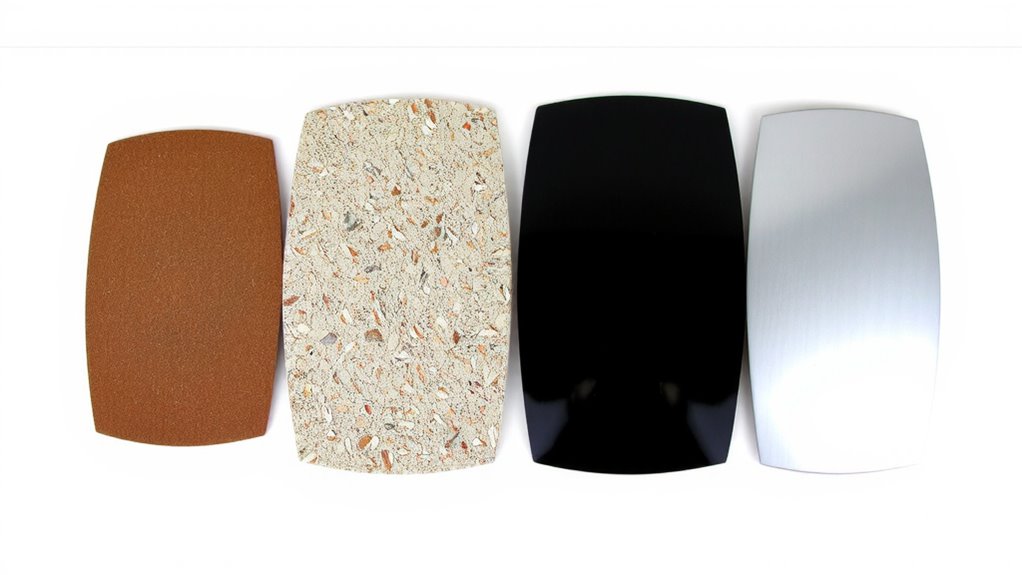
Because the size and hardness of abrasive particles directly influence surface smoothness, choosing the right compound is critical for achieving ideal gloss and clarity. Larger abrasives remove defects quickly but leave deeper swirls, degrading surface texture. Finer abrasives produce a smoother finish, enhancing light reflection. You’ll notice high-gloss results when surface texture averages below 0.5 microns Ra (roughness average). Compounds with diminishing abrasives-like silica or aluminum oxide-break down under friction, self-adjusting cut level. That allows controlled material removal without excessive marring. For maximum clarity, use a polish with particle sizes between 3–7 microns. These refine the surface evenly, minimizing scatter during light reflection. Heavy-cut compounds (8–15 microns) sacrifice initial clarity for depth correction. You need sequential polishing steps to achieve optically flat results. Each step progressively reduces surface texture, increasing gloss. Proper drying techniques after washing also play a role in maintaining paint integrity, as water spots and surface contaminants can interfere with polishing results-a quality car drying kit ensures a clean, spot-free surface before compounding.
Assessing Your Paint’s Condition
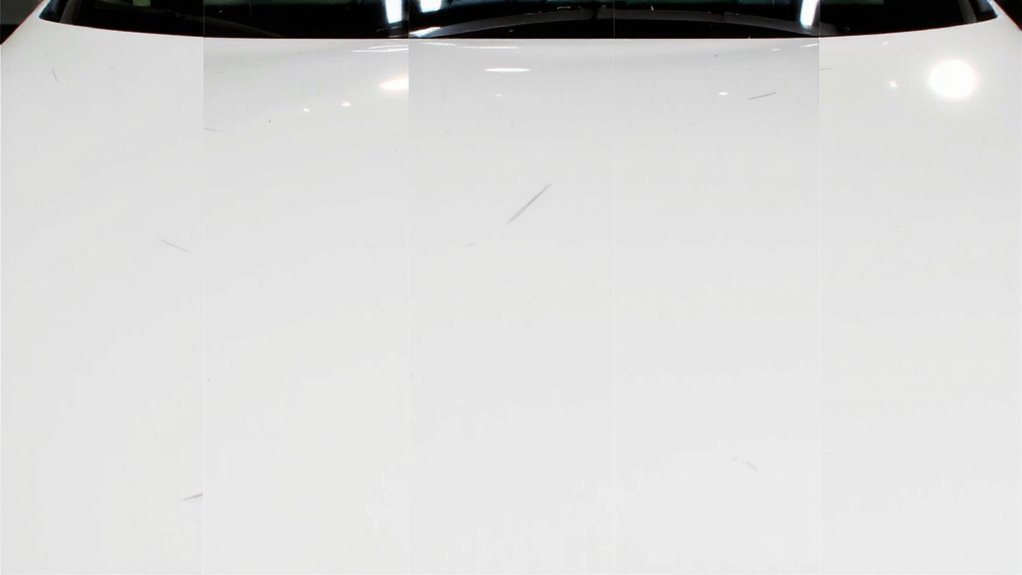
Before grabbing a pad and polish, taking a close look at your paint’s current state saves time and delivers better results. Paint aging and surface contaminants greatly influence polish selection and final finish. Inspect under bright, diffused light to reveal hazing, oxidation, or marring. Contaminants like tar, rail dust, or industrial fallout require removal before polishing. The right polishing compounds can make a significant difference in restoring paint finish quality, depending on the level of correction needed.
| Condition | Recommended Action |
|---|---|
| Light swirls, no scratches | Clay bar + fine polish |
| Surface contaminants present | Decontaminate first |
| Dull finish, mild oxidation | Medium polish |
| Deep oxidation, paint aging | Heavy cut (not detailed here) |
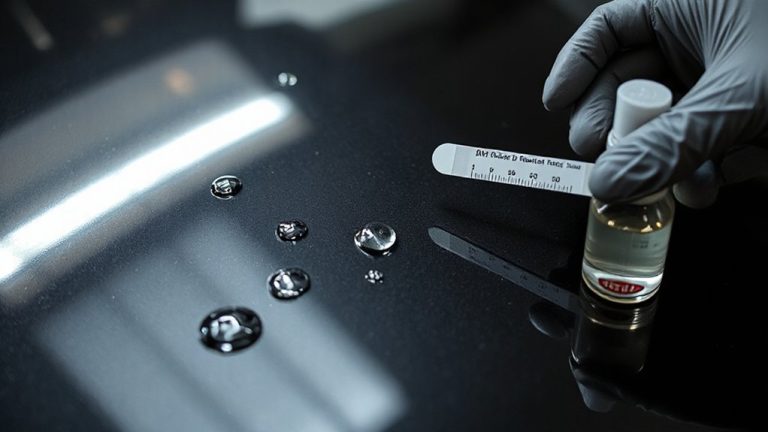
Use a paint thickness gauge to avoid thinning areas. Clay sliding over paint should feel smooth; stickiness indicates residual contaminants. Always test a small area. Proper assessment guarantees correct compound choice, preventing unnecessary abrasion and achieving maximum clarity.
When to Use Heavy-Cut Compounds
Sometimes, paint damage goes beyond what mild polishes can fix. You need heavy-cut compounds for deep scratches, severe oxidation, or heavy marring. These compounds offer maximum cut effectiveness, removing 15 to 25 microns of clear coat per pass with dual-action or rotary tools set at 1,500–3,000 RPM. Their abrasive particles, typically aluminum oxide or silicon carbide, measure 8 to 12 microns, providing aggressive material removal. Always verify material compatibility-some high-abrasion formulas can damage softer modern clear coats or thin paint layers. Use only on durable, OEM-style finishes at least 80 microns thick. Apply with firm pressure and consistent overlap to prevent burning. Test on a small area first. Heavy-cut compounds are your first step in extreme correction, but they leave swirls-so follow with finer products. They’re powerful, but misuse risks irreversible damage.
Finishing With Ultra-Fine Polishes
An ultra-fine polish is your final step in achieving a flawless, show-quality finish after heavy or medium compounding. It removes fine swirls and buffers existing oils to enhance gloss. Proper buffing techniques guarantee even distribution and prevent heat buildup. Use a lambswool or microfiber pad at 1,200–1,800 RPM for best results. Unlike aggressive compounds, ultra-fine polishes contain minimal abrasives-typically silica particles under 2 microns-making them ideal for eliminating residual surface defects.
| Feature | Specification |
|---|---|
| Abrasive Size | <2 microns |
| Best Pad Type | Lambswool/Microfiber |
| Speed Range | 1,200–1,800 RPM |
| Removal Level | 0.1–0.5 microns |
| Finish Type | High-gloss, swirl-free |
These polishes refine the clear coat without cutting deeply, preserving paint thickness while maximizing reflectivity.
Top Polishing Mistakes to Avoid
One wrong move during polishing can undo hours of careful prep work. Using an incorrect buffing speed reduces efficiency and risks damaging the clear coat. If you run your polisher above 1,200 RPM with a cutting pad, you generate excessive heat, leading to swirls or holograms. Most dual-action polishers work best between 1,000 and 1,500 RPM, depending on compound aggressiveness. Equally critical is improper pad selection. A foam pad too soft for your compound won’t cut evenly; one too firm can marring the surface. Pair medium-cut compounds with yellow or orange foam pads, typically 68–75 Shore A hardness. Always match pad density and compound grade to paint type and defect depth. Overlapping passes by 50% guarantees uniform results without burning. Let the machine do the work-pressing too hard amplifies errors. Avoid these mistakes, and your finish stays flawless.
Choose the Right Compound: Step-by-Step
How do you make sure your polish actually fixes the flaws instead of masking them? Start by evaluating the paint’s defect depth-light swirls need mild abrasives; deeper scratches require heavy-cut compounds. Choose a compound matched to your pad compatibility. Foam pads work best with fine to medium polishes, while wool holds more aggressive compounds. Never pair a harsh chemical formula with a soft pad-it reduces effectiveness. Set your buffer speed correctly. For cutting, use 1,200–1,800 RPMs; finishing runs best at 800–1,200 RPMs. Too fast causes heat buildup and holograms. Too slow limits cut efficiency. Match compound grit to defect severity: 1500–3000 for finishing, 600–1000 for heavy correction. Always test in a small area first. Your results depend on pairing the right chemistry, pad, and buffer speed-not just effort.
On a final note
Your paint’s final quality depends on selecting the correct polishing compound. Heavy-cut compounds remove deep scratches but leave haze, requiring refinement. Medium polishes balance cut and finesse for moderate defects. Ultra-fine polishes eliminate swirls, enhancing gloss. Match abrasives to damage depth: 3–6 micron for severe defects, 1–3 micron for light correction. Always follow manufacturer specifications for dwell time and speed. Proper compound choice guarantees a flawless, reflective finish.