Exploring the Chemistry of pH Levels in Cleaning Products for Car Maintenance
Your car’s clear coat stays intact within a pH 6–8 range; outside this, damage occurs. Acidic cleaners (pH <5) remove mineral deposits but risk etching if overused. Alkaline cleaners (pH 8–14) dissolve grease but degrade wax and harm aluminum above pH 11. Neutral pH washes (6.5–7.5) preserve wax, sealants, and ceramic coatings. Always dilute properly and test pH with litmus paper. Staying within pH 6.5–8.5 protects finishes-understanding these values guarantees effective, safe cleaning. More details follow on optimizing each step.
Notable Insights
- Car clear coats are sensitive to pH, with damage occurring outside the pH 6–8 range.
- Acidic cleaners (pH below 5) remove mineral deposits but can etch surfaces if misused.
- Alkaline cleaners (pH 8–14) emulsify grease but risk damaging paint and metals above pH 11.
- Neutral pH washes (6.5–7.5) are safest for routine use, preserving waxes and coatings.
- Always test cleaner pH with litmus paper or a meter to ensure compatibility with car surfaces.
What pH Means for Car Finishes
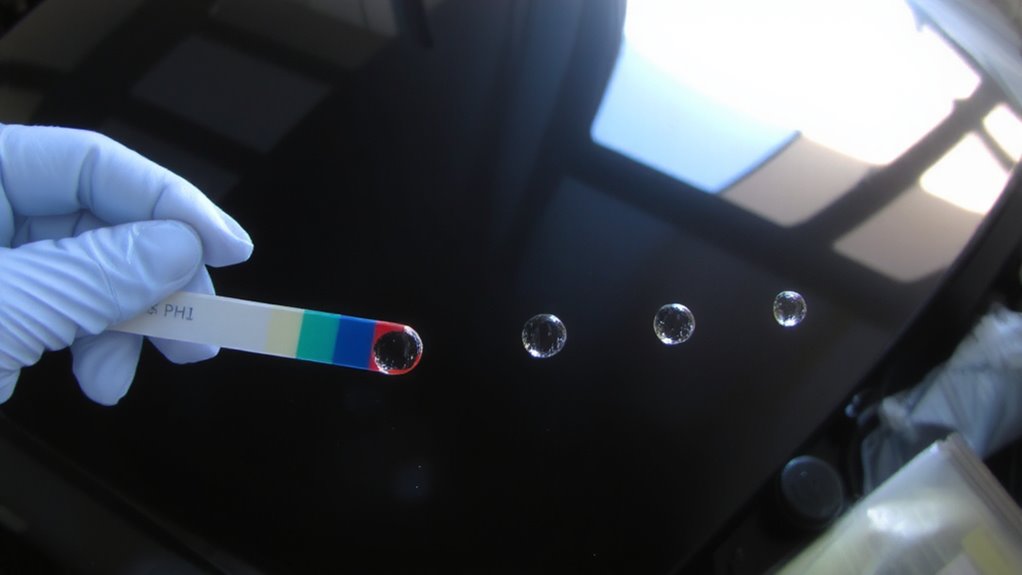
While pH might seem like a minor detail, it directly impacts how cleaning products interact with your car’s finish. Your car’s clear coat has pH sensitivity, meaning exposure to incorrect pH levels can trigger chemical reactions. Most factory finishes are stable between pH 6 and 8; outside this range, you risk damage. Alkaline solutions above pH 10 weaken polymer bonds, accelerating finish erosion over time. Even repeated use of pH 9 cleaners can degrade wax protection in as few as five washes. Water alone is pH 7-neutral-but most soaps range from pH 7.5 to 9.5. Opt for products labeled pH-balanced, ideally at pH 7.5–8.5, to maintain integrity. Deviating beyond safe limits compromises gloss and longevity. Proper pH alignment prevents micro-etching and maintains surface tension. Think of pH control like sunscreen for your car’s paint-it’s preventive chemistry. Many top-rated car cleaning kits include pH-balanced formulas specifically designed to preserve wax and protect sensitive finishes.
Acidic Cleaners: Safe Uses and Risks
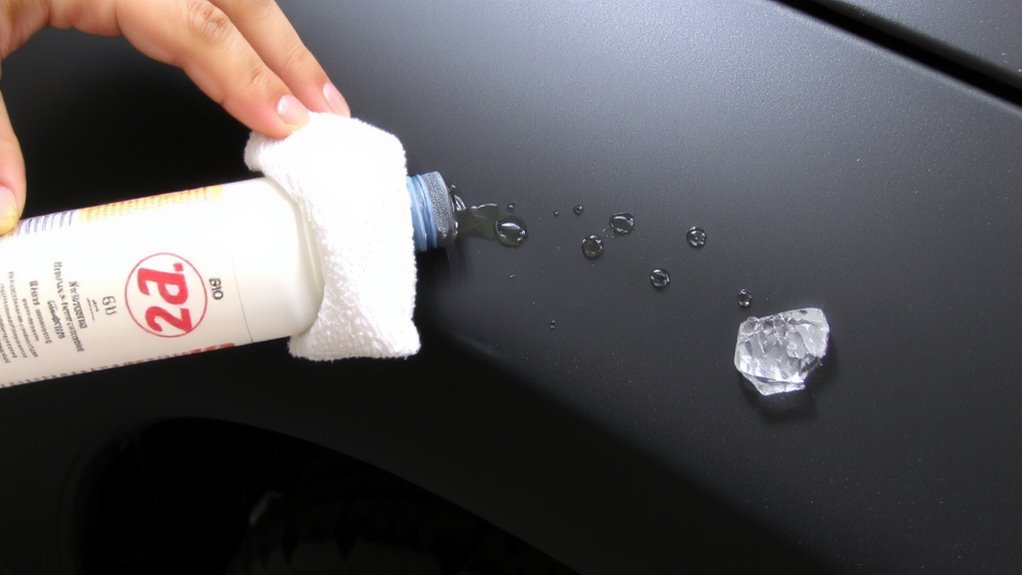
When you reach for an acidic cleaner, know that it’s a targeted tool, not for routine washing but for specific decontamination tasks. These cleaners typically have a pH below 5 and rely on controlled chemical reactions to dissolve mineral deposits like iron brake dust and water spots. They work fast-usually in 1–3 minutes-before requiring thorough rinsing. You’ll often see ingredients like sulfamic or phosphoric acid, which effectively break down contaminants without immediate surface corrosion if used correctly. However, prolonged contact or repeated applications can etch clear coats or damage chrome and aluminum. Always apply to cool surfaces and avoid direct sunlight to prevent accelerated reactions. Never mix with bleach or ammonia-it produces toxic fumes. With proper use, acidic cleaners are safe on glass, metal, and painted surfaces, but always follow manufacturer dilution ratios (often 10:1 water-to-concentrate) to minimize risk. For extended trips where comfort is key, consider pairing your maintenance routine with quality car camping comfort picks to enhance your overall vehicle-based adventures.
Alkaline Cleaners: Cutting Grease Without Damage
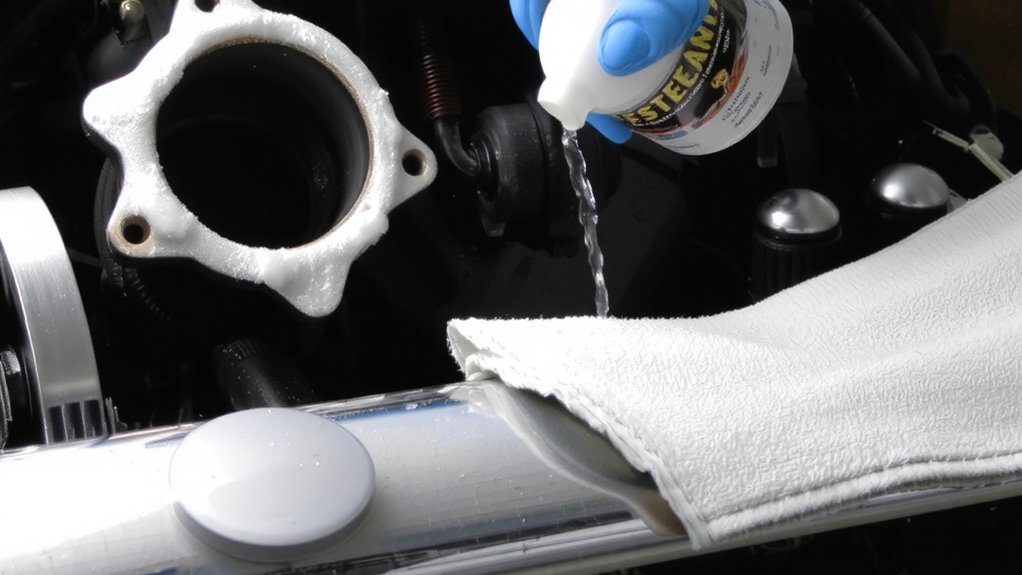
Alkaline cleaners operate on the opposite end of the pH scale from acidic formulas, making them ideal for tackling organic soils like grease, oil, and road grime. You’ll find their pH typically ranges from 8 to 14, with heavy-duty versions above 11. These cleaners work through grease emulsification, breaking down nonpolar residues by converting them into water-soluble compounds. This process allows grime to rinse away easily under pressure. However, surface compatibility matters-high-pH formulations can damage aluminum, rubber, or painted finishes if left unattended. Always dilute according to specs; a 5:1 water-to-cleaner ratio often balances power and safety. Use gloves and eye protection. Rinse thoroughly after application. For engine bays or undercarriages caked in grease, alkaline sprays outperform neutral options. Choose pH-balanced alkaline variants for painted surfaces. You’re relying on chemistry, not abrasion, so patience improves results. Top-rated engine degreasers effectively combine high alkalinity with corrosion inhibitors to protect sensitive components during cleaning.
Neutral pH Washes: Safest for Regular Use
Most neutral pH washes fall between 6.5 and 7.5 on the pH scale, making them ideal for frequent use on all vehicle surfaces. Their mild formula won’t strip wax or damage clear coat, offering reliable everyday safety. These washes balance cleaning power and surface protection, removing light contaminants without chemical aggression.
| Feature | Benefit |
|---|---|
| pH Range | 6.5–7.5 – minimizes material degradation |
| Surface Safety | Safe on paint, glass, plastics, and trim |
| Wax Compatibility | Preserves protective coatings |
| Environmental Impact | Low toxicity, biodegradable options |
| Rinse Residue | Minimal, reduces water spotting |
You can use them weekly without concern. Unlike high-pH solutions, neutral washes don’t rely on alkaline saponification. Instead, they lift dirt through surfactant action, maintaining finish integrity. For routine maintenance, their predictable performance and compatibility make them the smart, science-backed choice.
How to Test pH and Choose the Right Car Cleaner
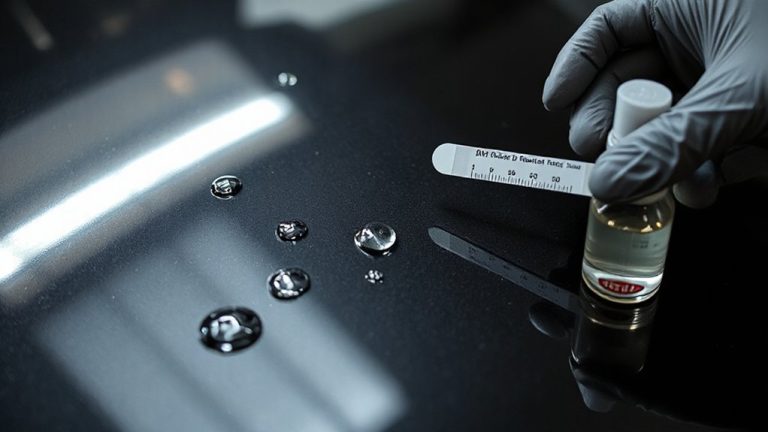
How do you know if a car cleaner is safe for your paint? Use pH testing methods like litmus paper or digital pH meters to measure acidity or alkalinity. A safe cleaner reads between 6.5 and 8.5 on the pH scale-close to neutral. Check product labels for exact pH values; manufacturers often list them. When evaluating cleaner selection criteria, prioritize pH stability, ingredient transparency, and compatibility with sealants or ceramic coatings. Avoid cleaners with pH above 9 or below 5 unless tackling heavy contaminants. Acidic formulas (pH <4) remove brake dust but risk paint etching. Alkaline degreasers (pH >10) cut grime but may strip wax. Always dilute concentrates per instructions-improper ratios alter pH effectiveness. Test unknown products on small, hidden areas first. Proper pH balance guarantees cleaning without damage-think of it like using the right soap for sensitive skin.
On a final note
You now know pH affects your car’s finish. Acidic cleaners (pH < 6.5) remove mineral deposits but etch clear coats if misused. Alkaline solutions (pH > 8.5) dissolve grease yet risk paint oxidation with prolonged exposure. Neutral shampoos (pH 6.5–8.5) safely clean weekly. Test products with pH strips accurate to ±0.2 units. Always follow dwell-time instructions. For best results, use surfactant-balanced, pH-specific cleaners designed for automotive finishes.