Parking Vehicles Away From Tree Branches That May Fall Under Snow Load
Park at least 10 feet from trees to avoid damage from snow-laden branches. Mature limbs can carry over 500 pounds of snow and ice-well beyond the 300–400 pound crush limit of most car roofs. Look for cracks, fungal growth, or V-shaped crotches, which signal weak limbs. Ice adds up to 30 pounds per linear foot, increasing failure risk, especially in winds over 20 mph. A single fallen limb can cause $2,500 in roof repairs. Further details on identifying at-risk trees and protective measures follow.
Notable Insights
- Park at least 10 feet away from trees to stay outside the fall radius of snow-laden branches.
- Avoid parking beneath deciduous trees with V-shaped crotches, which are prone to splitting under snow load.
- Choose open lots or areas with concrete overhead cover to minimize risk from falling icy branches.
- Mature tree limbs can carry over 500 pounds of snow and ice, exceeding a car roof’s weight limit.
- Regularly inspect nearby trees for cracks, decay, or lean, and trim vulnerable branches to prevent damage.
Snow-Laden Branches Can Damage Your Car
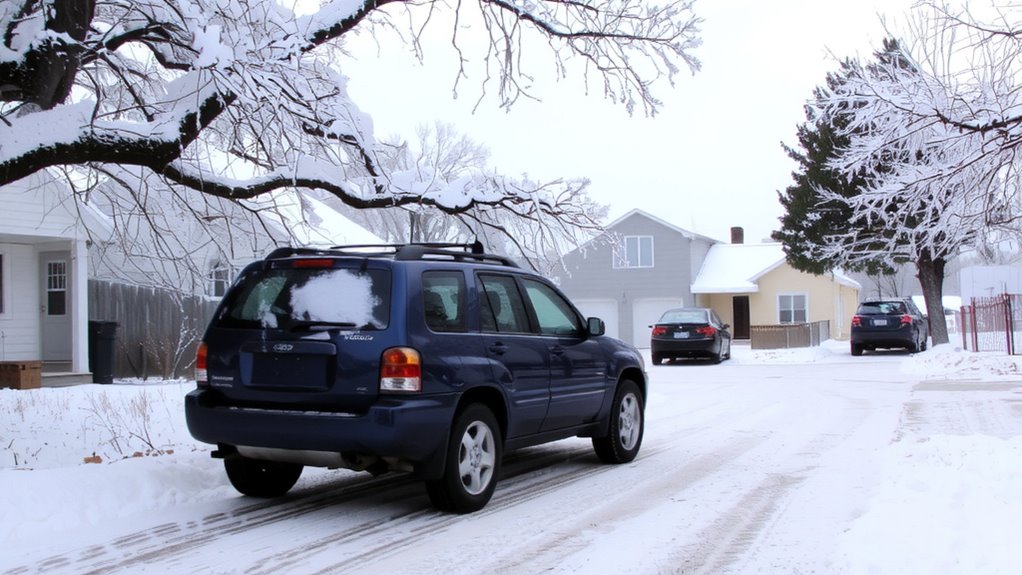
When snow accumulates on tree branches, the added weight can cause them to sag or snap without warning. Ice accumulation increases branch mass by up to 30 pounds per linear foot, drastically raising failure risk. Wind stress further exacerbates load, with gusts exceeding 20 mph generating lateral forces that compromise structural integrity. A mature maple limb can carry over 500 pounds of snow and ice combined, enough to crush a car’s roof, which typically withstands only 300–400 pounds of uniform pressure. Damage includes dented metal, shattered glass, and compromised sensors in modern driver-assist systems. Even small branches, when encased in ice, gain momentum and impact force comparable to a bowling ball dropped from two stories. You reduce exposure by parking at least 10 feet from tree lines, outside the fall radius defined by the tree’s height. Concrete structures or open lots offer greater protection. Prevention is structural, not situational-your best defense is spatial avoidance.
How to Spot Trees Weak From Snow Load?
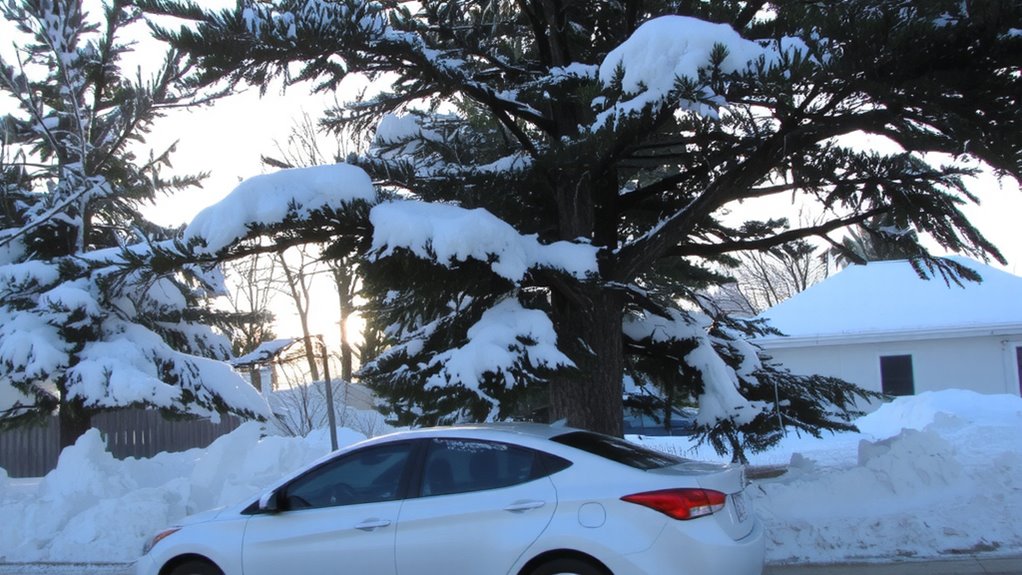
While ice buildup often makes headlines, it’s the hidden structural strain that turns a seemingly healthy tree into a hazard. You can spot weakness by checking for visible trunk cracks or leaning, which may indicate root instability. Trees with exposed roots or soil mounds near the base likely suffer from compromised anchorage. Look for fungal growth or cavities at the trunk base-these are signs of tree decay that reduce load-bearing capacity. Branch unions with included bark suggest weak attachments prone to failure under snow. A tree with more than 30% crown dieback is at high risk. Inspect after heavy snow; sagging limbs that don’t rebound signal internal stress. Use a 10-foot probe to check soil firmness around the base-soft, spongy ground suggests poor root support. Early detection prevents damage.
Park Away From Overhanging Tree Branches
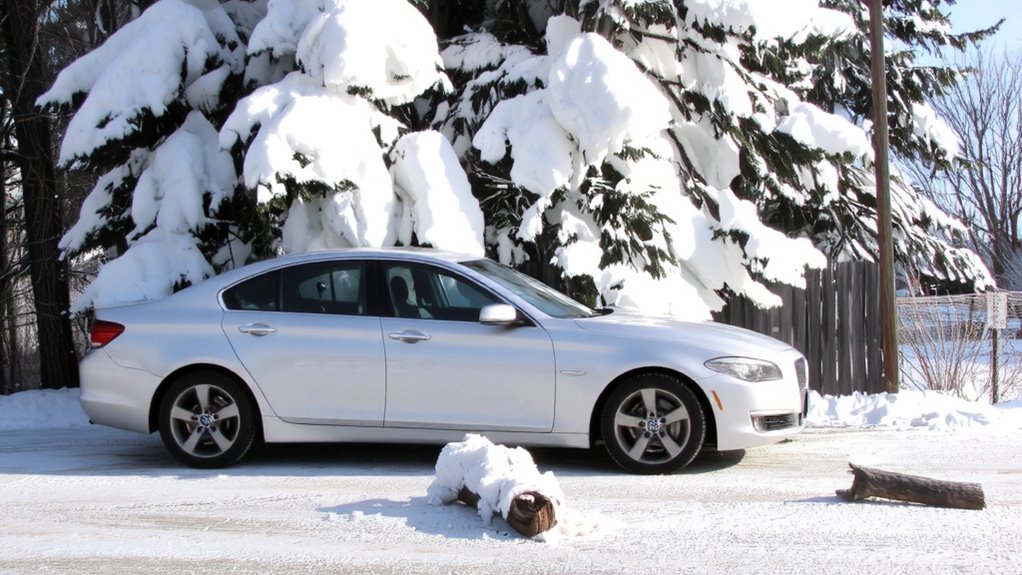
A smart choice in winter safety means parking your vehicle clear of overhanging tree branches. This simple step enhances parking safety and guarantees effective vehicle protection. Branches burdened by snow can exert over 30 pounds per square foot, exceeding structural limits of weakened limbs. Clearing a distance of at least 10 feet from tall or spreading trees reduces risk markedly. Ice accumulation increases branch weight exponentially-just half an inch of ice adds 500 pounds to a 30-foot limb. Park in open areas or under covered structures when possible. Standard asphalt lots with unobstructed overhead clearance offer ideal protection. Avoid zones beneath deciduous trees with V-shaped crotches or prior signs of decay. These structural flaws are prone to failure under load. Consistent attention to surroundings prevents avoidable damage. Prioritizing location safeguards your vehicle’s exterior and glass from impact fractures or crushing force. Parking safety isn’t luck-it’s informed positioning.
What to Do If a Branch Hits Your Car?
Impact from a falling tree branch can compromise your vehicle’s structural and safety systems, requiring immediate assessment. You should document damage thoroughly for insurance claims and estimate repair costs promptly. Visibility, frame integrity, and electrical systems may be affected, especially if the branch pierced the roof or windshield.
| Damage Type | Common Components Affected | Typical Repair Cost Range |
|---|---|---|
| Body Dent | Fender, hood, door panel | $150–$600 |
| Windshield Crack | Laminated glass, sensors | $200–$600 |
| Roof Puncture | Roof frame, insulation | $800–$2,500 |
| Sensor Malfunction | Backup camera, radar units | $300–$1,200 |
Contact your insurer quickly-comprehensive coverage typically includes such incidents. Assess repair costs against your deductible. Delaying inspection risks undetected structural compromise, like misaligned airbag sensors or weakened roof supports.
Prevent Winter Tree Damage at Home
When winter storms threaten, your trees face increased stress from ice, snow, and freezing winds-conditions that can lead to branch failure and property damage. You can reduce risk by ensuring your trees are healthy and structurally sound. Perform a root inspection annually to detect decay, girdling, or damage that compromises stability. Look for fungal growth, sinking soil, or cracked bark near the base. Address compaction with soil aeration, which improves oxygen flow and water penetration to roots. Use a core aerator to remove soil plugs 2–3 inches deep, spaced 6 inches apart across the drip line. Ideal timing is early fall or spring. Proper aeration increases root respiration by up to 40%, strengthening resilience. Avoid piling snow or ice against trunks, which promotes rot. Healthy root systems withstand freezing cycles better. Apply mulch in a 3-inch layer, keeping it 6 inches from the trunk to prevent moisture buildup.
Know When to Hire a Tree Expert
How do you know when a tree’s condition goes beyond DIY fixes? When you notice cracks in major limbs, trunk decay, or root instability, it’s time for a certified arborist’s tree inspection. You can’t assess structural weakness with the naked eye alone-specialized tools and training are required. Signs like leaning over 15 degrees from vertical, fungal growth on bark, or cankers indicate potential failure. A professional consultation guarantees accurate diagnosis using industry standards like ANSI A300. Arborists evaluate species-specific risks, branch union types, and vascular damage. They measure crown dieback exceeding 30% as a critical hazard threshold. Ignoring these signs risks property damage or personal injury. You need expert pruning, cabling, or removal only professionals should perform. Don’t gamble when falling limbs threaten vehicles or structures. Hire a credentialed tree expert-your safety and property depend on precise, science-based decisions.
On a final note
Keep your vehicle safe by parking beyond the drip line of trees. That’s where falling branches strike. Snow load exceeding 20 pounds per square foot stresses limbs. Look for cracks, dead wood, or splits. If a branch hits, document damage and file an insurance claim. Inspect trees yearly. Hire arborists certified by ISA. They assess structural risk and prune properly. Prevent damage before storms strike.