Decoding Solvent Types and Their Applications in Removing Contaminants From Car Bodies
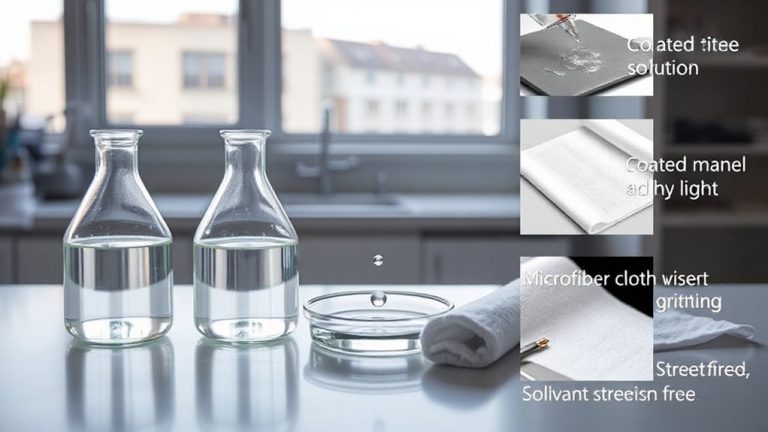
You rely on solvents to remove car contaminants, but success depends on matching polarity and evaporation rate to the grime. Water-based cleaners (pH 7–9) lift light dirt and wax haze safely. Isopropyl alcohol (70%–99%) dissolves grease fast, thanks to quick evaporation. Acetone breaks down tar and sap via hydrocarbon disruption-use under 15 seconds. Petroleum distillates (C7–C12) tackle heavy buildup with extended dwell. Blends combine solvents for mixed residues. Surface compatibility is critical. Best performance requires precise application-you’ll discover which materials tolerate which solvents next.
Notable Insights
- Solvent polarity determines effectiveness, with low to moderate polarity solvents best for nonpolar contaminants like grease and tar.
- Water-based cleaners remove light dirt and wax haze safely on clear coats due to neutral pH and low surface tension.
- Isopropyl alcohol (70%–99%) dissolves residues quickly and evaporates cleanly, ideal for glass, metal, and pre-waxing decontamination.
- Acetone effectively removes tar and sap by breaking hydrocarbon bonds but requires dilution and short contact to prevent surface damage.
- Petroleum distillates and solvent blends target heavy buildup with longer dwell times and synergistic action across varied contaminant types.
What Really Removes Car Grime: Solvent Science Made Simple
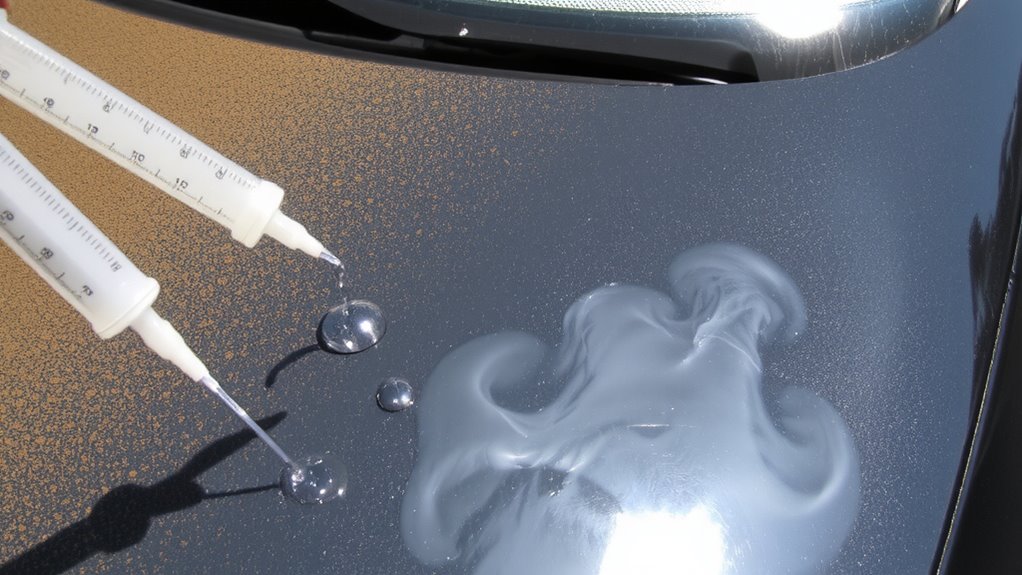
What makes a solvent cut through grime when water alone fails? It’s all about solvent polarity. Water’s high polarity limits its ability to dissolve nonpolar contaminants like grease and tar. You need a less polar solvent to break those bonds. Solvents with low to moderate polarity easily penetrate grime by disrupting molecular cohesion. The evaporation rate also matters-faster evaporation reduces dwell time but risks streaking; slower rates improve lifting but may leave residues. Ideal solvents balance polarity and evaporation rate, typically with boiling points between 100°C and 150°C. They dissolve oils without damaging clear coats. Think of it like matching solvents to grime: oil dissolves oil. This principle guides effective formulation. You’re not just cleaning-you’re applying chemistry. Matching solvent polarity to contaminant type and tuning evaporation rate guarantees efficiency, safety, and a spot-free finish every time.
Water-Based Cleaners for Light Dirt and Wax Haze
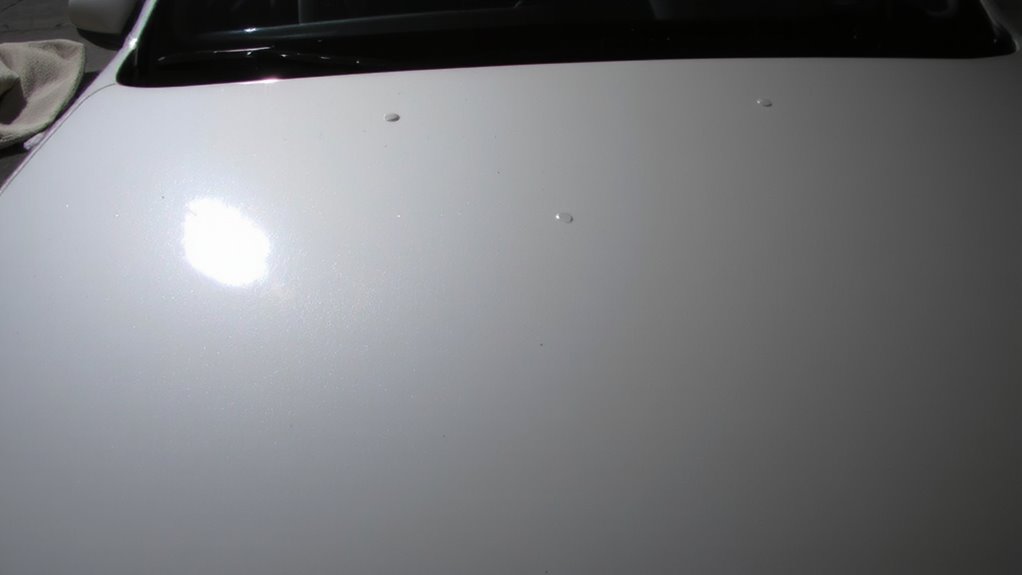
When dealing with light surface dirt or leftover wax haze, water-based cleaners offer a safe and effective solution that won’t compromise your finish. These cleaners rely on ideal pH balance-typically between 7 and 9-ensuring they’re gentle on wax and clear coats while still lifting grime. They reduce surface tension, allowing water to spread evenly and penetrate thin films. This action lifts wax residue without aggressive scrubbing. Unlike harsh solvents, they evaporate slowly, giving ample dwell time. A high-quality water-based tire shine can also be used safely on exterior trim without staining or drying out rubber.
| Feature | Benefit |
|---|---|
| Neutral to mild alkaline pH | Protects clear coat and wax layers |
| Low surface tension | Improves coverage and wetting |
| Water-based formula | Environmentally safer, low odor |
| Non-flammable | Safer storage and handling |
You’ll find these cleaners ideal for routine maintenance, especially after washing or before inspections.
Isopropyl Alcohol: Fixing Grease and Sticker Residue
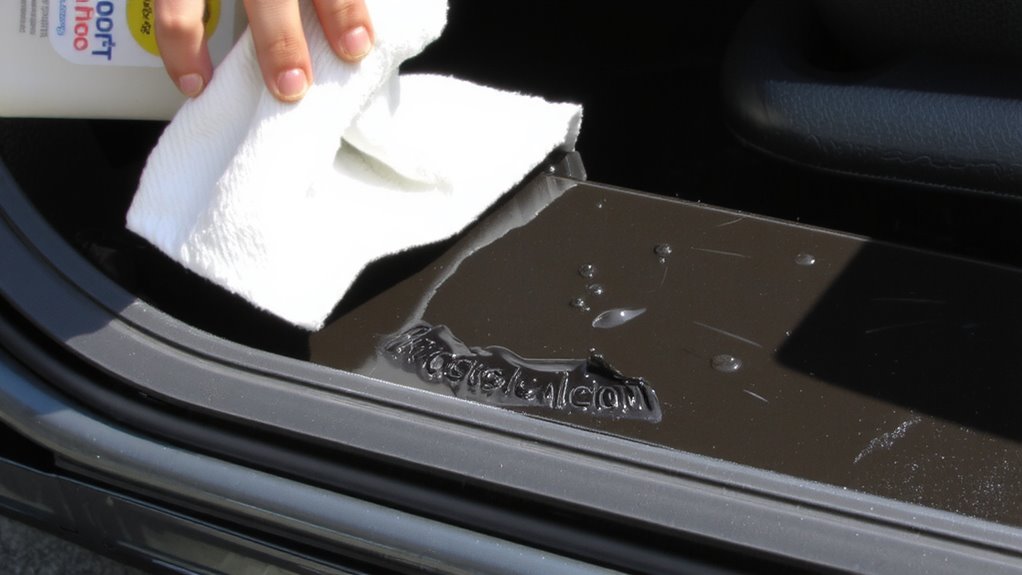
For tough contaminants like grease and stubborn sticker residue, isopropyl alcohol (IPA) is a go-to solvent in automotive detailing. You’ll find 70% to 99% IPA effective, with higher concentrations cutting through grime faster. IPA evaporates quickly, minimizing the risk of water spots or streaks. It’s generally safe on glass, metal, and most plastics, but surface compatibility varies-always check manufacturer guidelines. Perform residue testing on a small, inconspicuous area before full application to avoid hazing or clouding. Avoid repeated use on matte finishes or delicate trim. Use a microfiber cloth to apply in gentle, circular motions. IPA lacks the aggressiveness of stronger solvents, so it won’t damage factory clear coats when used properly. It’s ideal for pre-waxing decontamination or cleaning around headlights and trim. Keep ventilation in mind-IPA fumes are flammable and irritating in enclosed spaces. Choosing the right best tires for Kia Soul can enhance vehicle performance and handling, especially when maintaining a clean, contaminant-free undercarriage.
Acetone: Removing Tar and Sap (But Watch Your Paint)
A potent solvent with a sharp edge, acetone cuts through stubborn contaminants like dried sap and road tar with unmatched efficiency. You’ll find acetone rapidly achieves tar dissolution, breaking down hydrocarbon bonds on contact. It excels in sap removal, dissolving resinous deposits that resist milder cleaners. Use a 10% to 20% diluted solution on a microfiber cloth-never apply full strength. Acetone’s evaporation rate of 560 mm Hg at 20°C means it works fast but demands careful control. It can strip wax, damage clear coats, and soften paint if left in contact longer than 15 seconds. Always spot-test in an inconspicuous area. Rinse the area with isopropyl alcohol afterward to neutralize residue. Ideal for metal or glass surfaces, acetone demands respect-effective for targeted tar and sap removal, but aggressive enough to compromise your finish if misused.
Petroleum Distillates: Breaking Down Years of Buildup
Petroleum distillates handle grime that acetone can’t fully resolve-especially layers of oxidized contaminants built up over years. These solvents penetrate thick deposits of road film, aged wax, and grime through controlled chemical degradation. Unlike acetone, they don’t flash off too quickly, giving them time to work. That slower solvent evaporation rate extends contact time on the surface, improving breakdown efficiency. Their formulation typically includes C7–C12 hydrocarbons, balancing solvency and volatility. You’ll find they’re effective at ambient temperatures, usually between 60–85°F. Apply with a microfiber towel or soft brush to avoid marring. These solvents won’t damage clear coats when used properly, unlike harsher alternatives. They lift contaminants by disrupting molecular adhesion, not just dissolving surface material. Always work in ventilated areas. Petroleum distillates are less aggressive than chlorinated solvents but more persistent than alcohols.
Solvent Blends for Mixed Contamination
When dealing with mixed contamination-like combined layers of tar, brake dust, wax, and industrial fallout-single-solvent solutions often fall short. You need solvent blends engineered for specific contaminant combinations. These formulations rely on *solvent synergy*, where two or more agents amplify each other’s cleaning power. For instance, a blend of aromatic hydrocarbons and glycol ethers dissolves organic residues while lifting inorganic particles. The right mix improves contact time, with dwell times reduced by up to 40% compared to standalone solvents. Always perform *compatibility testing* on a small, inconspicuous area before full application. This guarantees the blend doesn’t compromise clear coats or rubber seals. Typical application ratios range from 5:1 to 10:1 (diluent to active solvent), depending on contamination severity. Evaporation rates are tuned between 0.8–1.5 butyl acetate equivalents to balance penetration and safety.
Which Surfaces Can Handle Which Solvents?
Surface compatibility isn’t something you can afford to guess. Using the wrong solvent risks damaging critical exterior components. Plastic compatibility and rubber sensitivity vary widely across materials, so matching solvent strength to surface type is essential. For instance, strong solvents like toluene degrade soft plastics and swollen rubber seals, while isopropyl alcohol is safer for sensitive trims.
| Surface Type | Safe Solvents | Avoid |
|---|---|---|
| Painted Metal | IPA, Acetone, Toluene | None (durable) |
| Hard Plastics | IPA, Mineral Spirits | Toluene, MEK |
| Soft Plastics | Mild detergent, IPA | Acetone, Toluene |
| Rubber Seals | Water-based cleaners | Aromatics, Ketones |
Always test solvents on inconspicuous areas. You preserve finish integrity and avoid costly repairs.
On a final note
You now know which solvents tackle specific contaminants without damaging your car’s finish. Water-based cleaners remove light dirt and wax haze safely, with pH-balanced formulas protecting clear coats. Isopropyl alcohol dissolves grease and sticker residue at 70% concentration, evaporating without streaks. Acetone removes tar and sap but requires precision-use it sparingly to avoid softening paint. Petroleum distillates lift years of grime but demand protective masking. Solvent blends target mixed residues effectively when formulated with controlled volatility. Always match solvent strength to surface compatibility to maintain integrity and finish longevity.