Desert and Heat Emergencies Preparedness Tips Every Driver Should Know
You must recognize heat exhaustion early-body temperature above 100.4°F (38°C) signals danger. Stay hydrated: drink 64 oz daily at rest, up to 256 oz during strenuous activity. Carry a heat emergency kit with one gallon of water per person, electrolyte tablets, a 500-lumen flashlight, and a calibrated thermometer. If stranded, stay with your vehicle-it retains survivable conditions for hours. Use shade, cross-ventilation, and signaling with reflective materials. A mylar blanket and UV clothing boost survival odds-key steps follow.
Notable Insights
- Recognize heat exhaustion early by monitoring body temperature, pulse rate, and symptoms like dizziness or nausea.
- Build a heat emergency kit with water, electrolyte tablets, UV-protective clothing, and a mylar thermal blanket.
- Stay with your vehicle during a desert breakdown to conserve energy and increase visibility to rescuers.
- Hydrate proactively by drinking 0.5 to 2 gallons of water daily, depending on activity level.
- Use shade, cross-ventilation, and reflective materials to reduce cabin heat and maintain airflow.
Spot Heat Exhaustion Early
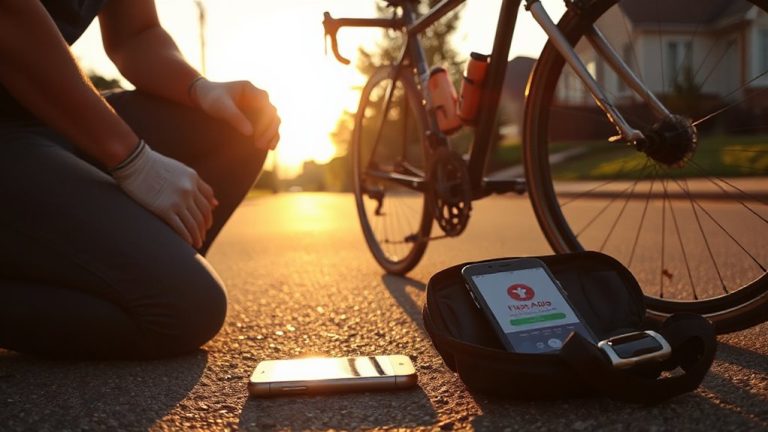
Why do some people collapse in the heat while others keep going? You’re at risk when your body temperature rises above 100.4°F (38°C), a key sign of heat exhaustion. Early symptoms include heavy sweating, weakness, dizziness, and nausea. Your skin may feel cool and moist despite the hot environment. These occur as your body struggles to regulate core temperature through sweat evaporation. Dehydration reduces blood volume, impairing cardiovascular response. Without intervention, body temperature can escalate to dangerous levels-above 104°F (40°C)-triggering heat stroke. Recognizing early symptoms within the first 30 minutes of exposure improves outcomes. Monitor pulse rate; values exceeding 120 bpm at rest suggest physiological stress. Treat promptly: move to shade, hydrate with electrolyte solutions, and cool skin with wet cloths. Your ability to respond early determines recovery speed and safety in extreme heat.
Pack an Emergency Kit for Extreme Heat
A well-prepared emergency kit increases your odds of staying safe when extreme heat strikes. Your emergency kit contents should include at least one gallon of water per person per day, UV-protective clothing, a hand-held shade canopy, and electrolyte replacement tablets. Include a digital thermometer (measuring 90–110°F range) and a 500-lumen flashlight with extra batteries. Add a mylar thermal blanket, which reflects 90% of body heat, and a multi-tool with pliers and blade. Verify your first-aid kit includes sunburn gel with at least 1% hydrocortisone. Vehicle maintenance is critical: check coolant levels, hoses, belts, and tire pressure monthly. Use a tire gauge to maintain PSI within OEM specifications. Install a battery tester to monitor charge levels above 12.6 volts. A fully charged 12-volt system supports fan operation and communications. These steps guarantee resilience during extreme heat exposure. For added safety, choose a car emergency blanket with high thermal reflectivity and compact design to maximize insulation and portability.
Survive a Breakdown in the Desert
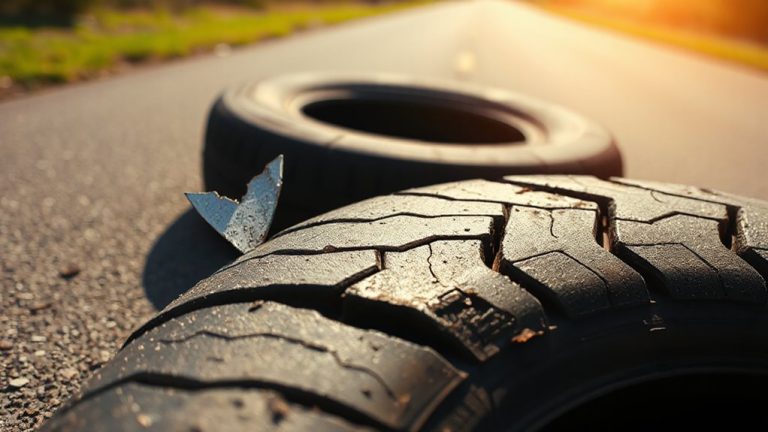
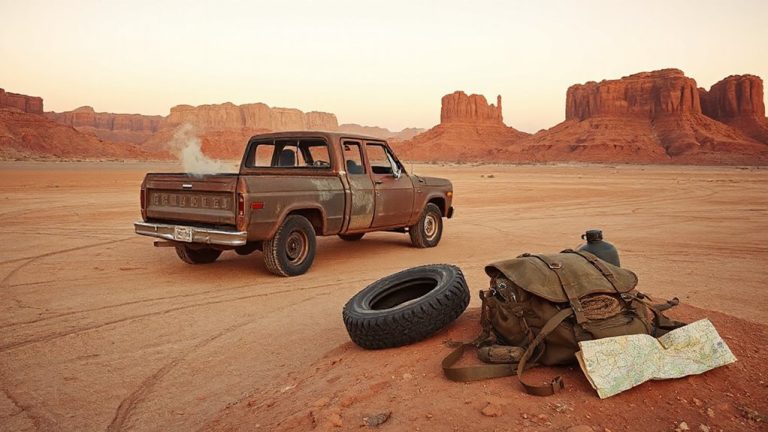
If your vehicle fails in the desert, staying calm and acting methodically can mean the difference between survival and catastrophe. An engine failure or tire blowout demands immediate, precise action. Pull completely off the road to avoid hazards and increase visibility. Turn on hazard lights to signal distress to distant traffic. Stay with your vehicle-it provides shelter and increases your chance of rescue. The metal frame shields you from solar radiation, much like a Faraday cage deflects energy. Use reflective panels or brightly colored cloth to signal aircraft. Conserve energy; avoid walking unless help is visible within two miles. A standard sedan’s cabin can retain usable air temperature up to three hours post-sunset. Carry a 150-decibel whistle and signal mirror-tools proven effective in daytime rescues. Engine failure doesn’t mean system failure-your car is now your survival shelter. A compact car camping fan can help circulate air and reduce heat stress during prolonged waits.
Stay Hydrated: How Much Water You Need
Half a gallon of water per day is the minimum you need to stay hydrated in desert conditions, but that amount can double depending on activity and temperature. Your body loses fluids rapidly in dry heat, so maintaining proper water intake is critical. Dehydration impairs cognitive function and reduces your ability to make sound decisions.
| Activity Level | Recommended Daily Water Intake |
|---|---|
| Low (resting) | 0.5 gallons (64 oz) |
| Moderate (walking) | 1 gallon (128 oz) |
| High (strenuous work) | 1.5–2 gallons (192–256 oz) |
Hydration levels should be monitored by urine color-pale yellow indicates adequate hydration. Dark urine signals dehydration. Drink small amounts every 15–20 minutes, even if you’re not thirsty. Water intake must exceed fluid loss to maintain performance and prevent heat illness.
Cool Down Fast: Use Shade and Airflow
When the sun’s radiation intensifies during peak hours, finding shade isn’t just comforting-it’s a critical step in preventing heat-related illness. Park in the shade or use a reflective sunshade to block solar gain; these reflective surfaces reduce interior temperatures by up to 30°F. Open windows slightly on opposite sides to create cross-ventilation, enabling airflow that enhances evaporative cooling from your skin. This process lowers your body temperature more efficiently than still air. Use a hand-held fan or portable 12V vehicle fan operating at 5–7 CFM airflow to accelerate this effect. Even minimal air movement of 2–3 mph across the skin markedly improves heat dissipation. Avoid dark surfaces inside the vehicle-they absorb thermal radiation and re-emit heat. Instead, use light-colored or reflective materials on dashboards and windows to deflect solar energy. Evaporative cooling works best in dry desert air, where low humidity allows sweat to evaporate rapidly. For sustained relief in parked vehicles, consider a 12V car heater with best 12V car heaters for use during cooler desert nights.
Signal for Help When Stranded
How will you make sure rescuers can find you if your vehicle breaks down in the desert? Activate visible and audible signals immediately. Use handheld flares that burn at 1,500°F for up to 60 seconds, producing a red flame visible up to two miles away during nighttime. For daytime, smoke flares generate dense orange smoke detectable from 1,000 yards. Always ignite flares at a 45-degree angle downwind to avoid injury. Pair visual signals with sound. A high-pitched survival whistle, such as a 120-decibel pea-less model, projects sound up to a mile in open terrain. Three sharp blasts is the universal distress signal-repeat every few minutes. Position flares at 15-minute intervals if moving away from the vehicle. Stay near your car-it’s easier to spot than a person. These tools greatly increase detection odds when electronic communication fails. Responsibly deployed, they bridge the gap between breakdown and rescue.
On a final note
You must act quickly in desert heat emergencies. Core body temperature above 104°F indicates heatstroke-immediate cooling is critical. Keep at least one gallon of water per person for three days; store it in UV-resistant, BPA-free containers. Use reflective sunshades and white emergency tarps to reduce interior vehicle temps by up to 30°F. Signal for help with an SOS mirror-visibility reaches 10 miles in clear conditions. Stay prepared, stay alive.