Ethanol Fuel System Conversion: Complete Parts List and Installation Guide
You need an ethanol-compatible fuel system to safely run E85. Replace all rubber fuel lines with PTFE-lined or fluoropolymer hose rated for 95%+ ethanol and 300 psi burst. Install a high-flow, ethanol-safe fuel pump (≥300 LPH at 75 psi) with proper wiring support. Upgrade to larger, high-impedance injectors (65–100 lb/hr) designed for ethanol. Retune your ECU for a 9.8:1 air-fuel ratio and increased timing. Use stainless steel fittings and ethanol-safe clamps throughout. Everything must meet SAE J2657 standards. A complete, properly installed system activates E85’s 10–15% power gain and cleaner operation-your next step reveals exactly how to build it right the first time.
Notable Insights
- Upgrade to ethanol-compatible fuel lines rated for E85 using PTFE-lined or fluoropolymer hose meeting SAE J2657 standards.
- Install a high-flow fuel pump (≥300 LPH) capable of supporting E85’s 30% higher fuel volume demand.
- Replace stock injectors with larger, ethanol-rated units (65–100 lb/hr) for proper fuel delivery and atomization.
- Retune the ECU to adjust air-fuel ratio to 9.8:1 and optimize ignition timing for E85’s 105 octane.
- Use a wideband O2 sensor and ethanol content sensor to enable accurate tuning and flex-fuel capability.
Switch to E85 for More Power and Cleaner Emissions
What if you could boost power while reducing emissions? Switching to E85 delivers both. Ethanol benefits include higher octane-typically 105 compared to 93 in premium gasoline-enabling greater spark advance and more aggressive timing without knock. This directly contributes to measurable performance gains. E85 also burns cleaner, reducing carbon buildup and harmful tailpipe emissions. The fuel’s high heat of vaporization lowers intake charge temperatures, increasing air density and improving combustion efficiency. You’ll need upgraded fuel delivery components, but the engine tolerates higher compression and boost on E85. Real-world dyno tests show 10–15% horsepower increases in tuned flex-fuel setups. While fuel economy drops 20–30% due to lower energy density, the performance gains and cleaner operation make up for it. Ethanol benefits extend engine life and support renewable energy goals.
Replace Fuel Lines With Ethanol-Resistant Hose
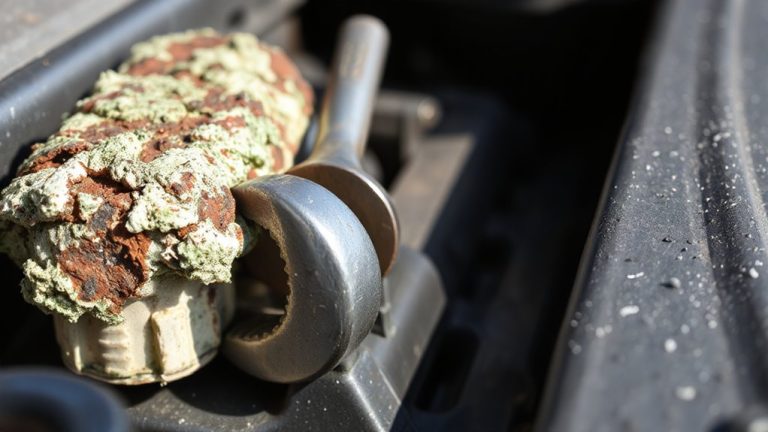
E85’s performance and emissions benefits demand upgrades to your fuel system, starting with the fuel lines. Standard rubber hoses aren’t built for long-term fuel compatibility with ethanol. E85 causes material degradation in conventional nitrile rubber, leading to swelling, cracking, and eventual fuel leaks. You need ethanol-resistant hose rated for at least 95% ethanol content. Use PTFE-lined or reinforced fluoropolymer hose with a minimum 300 psi burst rating. These materials resist swelling and maintain structural integrity under high alcohol exposure. Replace all sections-from tank to fuel rail-with hose meeting SAE J2657 standards. Stainless steel braiding adds abrasion and pressure resistance. Use ethanol-safe hose clamps to prevent leaks. Don’t overlook hard lines; inspect metal sections for corrosion. Replacing the entire path guarantees consistent performance. This step prevents contamination and system failure, keeping your E85 conversion safe and reliable.
Install an Ethanol-Safe High-Flow Fuel Pump
Reliability hinges on delivering consistent fuel volume and pressure, especially when running high-ethanol blends. You need an ethanol-safe high-flow fuel pump rated for E85’s demanding requirements. These pumps maintain proper fuel pressure under load-critical because ethanol requires nearly 30% more volume than gasoline for the same energy output. Choose a pump with a minimum flow rate of 300 liters per hour at 75 psi. Confirm electrical compatibility: your vehicle’s existing wiring and relay must support the pump’s amperage draw, typically 10–15 amps. Use a dedicated power relay and fuel pump resistor if needed. Install an in-line fuel pressure regulator matched to your engine’s requirements, usually 58–65 psi for E85. Mounting location matters-place the pump in the tank or low and close to the fuel source to prevent vapor lock. Always follow manufacturer clearances and use ethanol-rated seals.
Add Larger Injectors for E85’s Fuel Demand
Your fuel pump now delivers the volume and pressure needed for high-ethanol blends, but that’s only half the battle. E85 requires about 30–40% more fuel by volume than gasoline due to its lower energy content. Stock injectors can’t meet this demand, even with proper fuel pressure. You need larger injectors with a higher flow rate to deliver enough fuel at both idle and full load. High-impedance injectors in the 65–100 lb/hr range are typical for turbocharged E85 builds. These injectors maintain stable fuel pressure across operating conditions while supporting increased airflow. They also atomize ethanol more effectively under high fuel pressure, improving combustion. Choose injectors with a clean spray pattern and OEM-style connectors for easier integration. Make sure they’re ethanol-rated-standard injectors may degrade. Proper flow rate and compatibility guarantee consistent performance and prevent lean conditions.
Retune Your ECU for High-Ethanol Blends
While the hardware upgrades you’ve made enable ethanol compatibility, they won’t deliver ideal performance without the right calibration. Ethanol requires a richer air-fuel ratio-around 9.8:1 compared to gasoline’s 14.7:1-so you must adjust your fuel mapping. Modern ECUs support ethanol sensing, allowing real-time adaptation to blends from E0 to E85. Without proper tuning, you’ll see poor drivability, reduced power, or even engine damage. Retuning modifies fuel injector pulse widths to deliver more fuel and adjusts ignition timing due to ethanol’s higher octane rating (105–110 AKI). You’ll typically gain 4–6 degrees of timing advance, improving combustion efficiency and power. Use a wideband O2 sensor and dyno testing to verify accuracy. Flash your ECU with custom software or use a handheld programmer. Factory-style tuning guarantees safe, repeatable performance whether you’re running E30 or E85.
Use Stainless and Polymer Parts to Prevent Corrosion
Ethanol’s hygroscopic nature means it attracts moisture, increasing the risk of internal corrosion in fuel system components not designed for high-blend use. You need materials with proven chemical resistance and material compatibility. Stainless steel fuel lines (304 or 316 grade) resist pitting and maintain integrity under ethanol exposure. Use them for all hard lines-minimum 6 mm outer diameter for adequate flow. Polymer components, like Viton or PTFE seals and hoses, won’t degrade like rubber. These polymers handle ethanol concentrations up to E100 without swelling or cracking. Replace all copper, aluminum, or brass fittings-they corrode quickly. Your fuel rail, injectors, and filter must also support ethanol blends. Check manufacturer specs for chemical resistance ratings. Use only ethanol-rated O-rings and threaded fittings. Proper material selection prevents leaks, clogs, and component failure. It’s not overkill-it’s essential for long-term reliability.
Install Your Conversion: A Step-by-Step DIY Guide
What does it take to upgrade your fuel system for ethanol? You need to guarantee fuel compatibility and proper system sealing. Begin by draining the old fuel and disconnecting the battery. Replace fuel lines with PTFE-lined hose rated for E85. Upgrade the fuel pump to a high-flow unit supporting 10–15% higher volume. Install ethanol-compatible injectors calibrated for your engine’s ethanol blend.
| Component | Material/Spec | Purpose |
|---|---|---|
| Fuel Line | PTFE polymer | Prevents swelling, guarantees sealing |
| Fuel Pump | 255 LPH, E85-rated | Maintains pressure, compatibility |
| Injectors | 85 lb/hr, Viton seals | Supports stoichiometric tuning |
Verify all connections for leaks. Test run the engine and monitor for misfires or pressure drops. You’re now ready for ethanol performance.
On a final note
You’ve upgraded to handle E85’s aggressive solvent properties and higher flow demands. Ethanol-resistant fuel lines (SAE J30 R9 spec) prevent swelling. Your 340 LPH high-pressure pump sustains rail pressure under load. Larger injectors (25% greater flow) meet stoichiometric demand at 9.8:1 AFR. Stainless steel and fluoropolymer fittings resist corrosion. Retuning via ECU flash guarantees precise lambda control. This conversion activates +15% horsepower and cooler combustion.