The Role of the Intake Manifold in Modern Engines: How Its Design Influences Airflow, Combustion Efficiency, and Overall Engine Performance
Your intake manifold guarantees even air distribution to each cylinder, boosting combustion efficiency and throttle response. It uses smooth, tapered runners (40–50mm diameter) and a 3–6 liter plenum to stabilize airflow. Variable-length systems switch between long runners for low-end torque and short ones for high-RPM power. Plastic manifolds save weight, while aluminum handles heat better. Proper design improves fuel economy by up to 8% and optimizes performance-discover how tuning each element affects real-world results.
Notable Insights
- The intake manifold ensures even air distribution to cylinders, promoting consistent combustion and optimal engine performance.
- Variable-length intake systems adjust runner length to enhance torque at low RPM and horsepower at high RPM.
- Plenum volume stabilizes air pressure pulses, improving fuel economy and engine responsiveness.
- Smooth, tapered runner design minimizes turbulence, increasing airflow velocity and combustion efficiency.
- Material choice (plastic or aluminum) affects weight, cost, heat resistance, and intake air temperature management.
What an Intake Manifold Does in Modern Engines
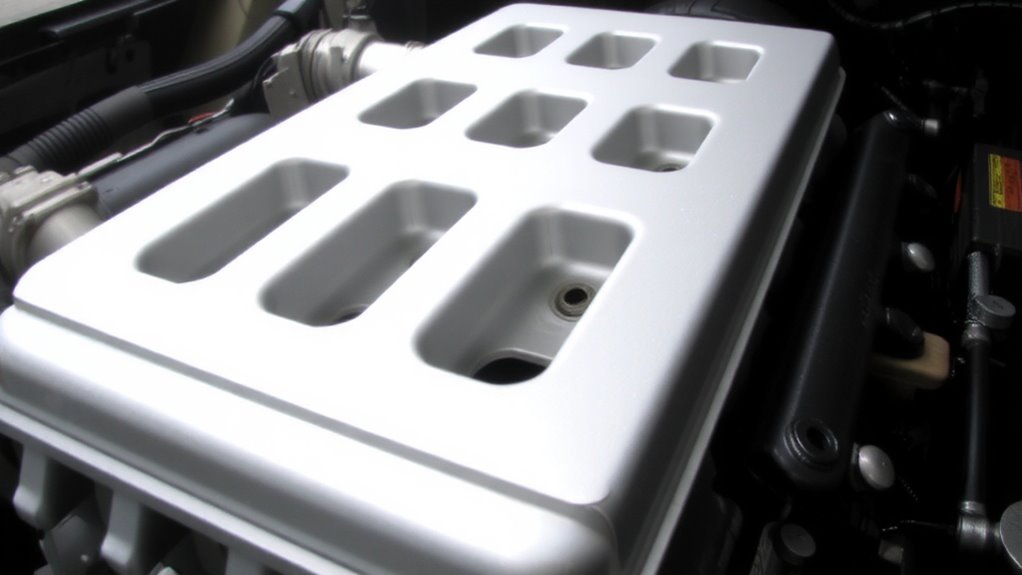
While airflow might seem simple at first glance, the intake manifold plays a critical role in how efficiently your engine breathes. It distributes air evenly to each cylinder, ensuring consistent combustion. Modern manifolds integrate with electronic systems to support cold start enrichment, providing extra fuel during ignition when temperatures are low. This prevents stalling and reduces emissions. You also rely on precise throttle response calibration, which the manifold facilitates by maintaining ideal air pressure and flow dynamics. Variable intake manifolds adjust runner length based on RPM, improving torque across the power band. Materials like cast aluminum or composite plastics reduce weight while maintaining durability under temperatures up to 200°C. The plenum volume, typically 3–6 liters, stabilizes pressure pulses. Without proper function, fuel economy drops by up to 8%, and acceleration lags noticeably.
How Manifold Design Controls Airflow and Burn Efficiency
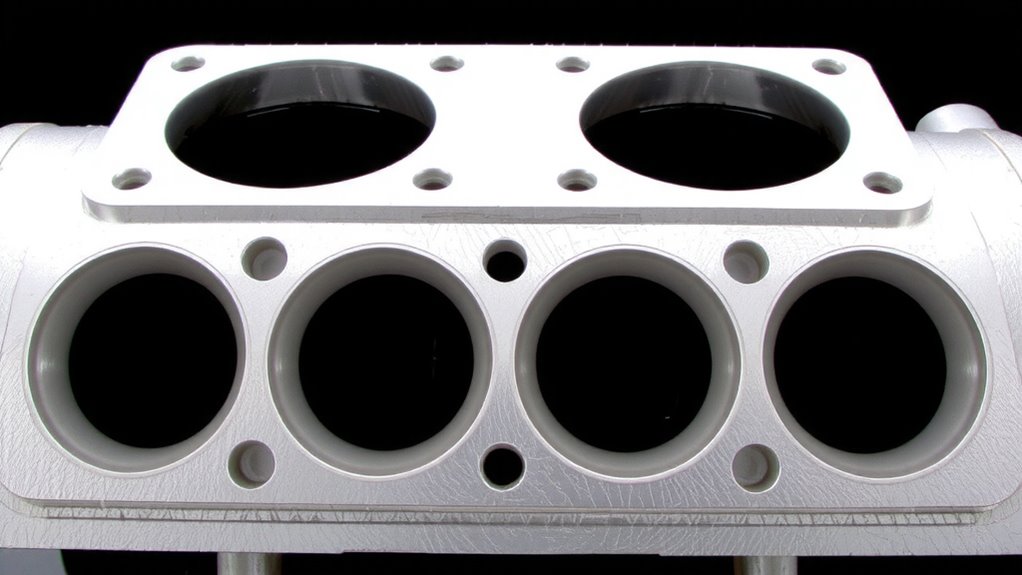
The design of the intake manifold directly shapes how air moves into the engine and how completely the fuel burns. Your engine relies on precise flow dynamics to deliver air evenly to each cylinder. An optimized manifold uses smooth, tapered runners to minimize turbulence and maximize velocity. This guarantees consistent air distribution, which improves mixture formation. Proper air-fuel mixing supports accurate burn timing, critical for power and emissions. Shorter, wider runners favor high-rpm airflow but can reduce low-end torque. The plenum volume-typically between 30% and 60% of engine displacement-affects pressure stabilization. A well-sized plenum dampens pressure pulses, enhancing volumetric efficiency. Material choice, like cast aluminum or composite, influences temperature control. Cooler air entering the cylinder increases density, supporting more complete combustion. You’ll see efficiency gains in both fuel economy and horsepower when flow dynamics and burn timing are synchronized through smart manifold design.
Variable-Length Intakes: Maximizing Power Across RPMs
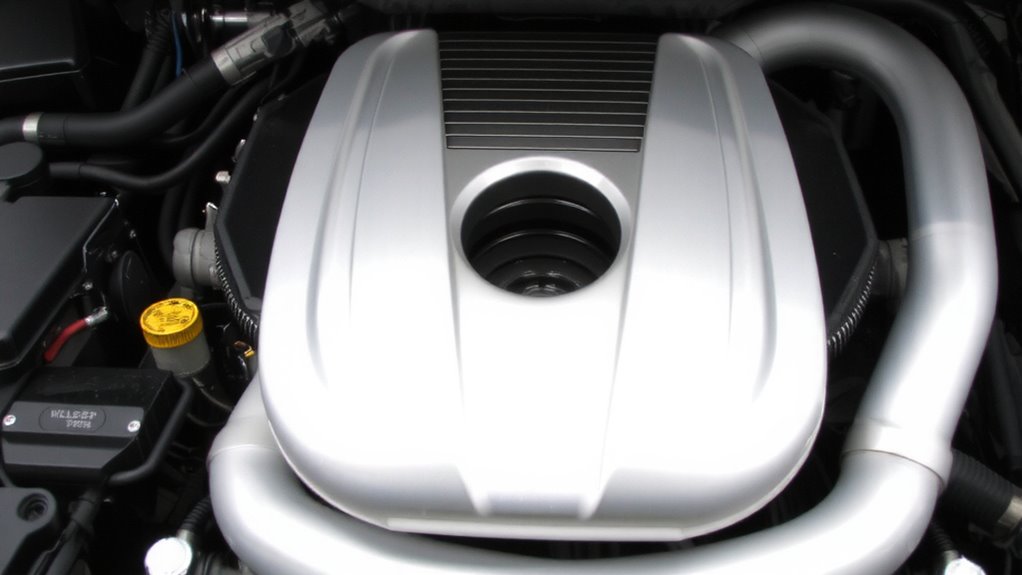
When engine speed changes, so do the demands for airflow-and that’s where variable-length intake systems step in to deliver the best of both worlds. At low RPMs, longer intake runners enhance tuned resonance, increasing pressure waves that improve cylinder filling and torque. As RPMs rise, shorter runners take over through airflow switching, reducing resistance and boosting high-end power. You get ideal performance across the rev range without sacrificing efficiency. These systems use rotary valves or sliding sleeves, typically activated by vacuum or electric actuators above 4,500 RPM. The intake plenum volume and runner diameter-often between 40–50mm-are engineered precisely to synchronize with engine timing. By leveraging pressure wave dynamics, variable-length intakes maintain combustion efficiency while expanding the power band. It’s not magic-it’s physics and smart design working together to keep your engine breathing strong.
Short vs. Long Runners: Tuning for Torque or Horsepower
You’ve seen how variable-length intake systems adapt runner length to optimize performance across the RPM range, but now let’s break down why those changes matter by comparing short and long runners directly. Short runners, typically under 12 inches, promote high-RPM horsepower by allowing faster airflow and reducing backpressure. They excel in engine tuning focused on peak power, often used in performance and racing applications. Long runners, usually over 18 inches, enhance low-end torque by using pressure waves to pack more air into cylinders at lower RPMs. This runner length improves cylinder filling efficiency around 2,500–4,500 RPM. Engine tuning choices depend on desired output: long runners for drivability and towing, short ones for track performance. Each design manipulates resonance and wave dynamics to boost performance where it’s needed most. Proper runner length selection is critical in matching the engine’s power band to its intended use.
Intake Manifold Materials: Plastic vs. Aluminum
Choosing the right material for an intake manifold isn’t just about strength-it’s about tuning engine efficiency. You’ll often choose between plastic and aluminum, each with distinct trade-offs. Plastic manifolds are lightweight, reducing overall engine mass by up to 30% compared to aluminum. They offer excellent cost efficiency, requiring less machining and enabling complex internal geometries through injection molding. Their smooth interior surfaces improve airflow, but heat resistance is limited-most withstand temperatures up to 230°C before warping. Aluminum manifolds handle heat better, tolerating sustained exposure to 400°C, making them ideal for turbocharged engines. They also dissipate heat faster, reducing intake air temperatures by 10–15°C. But aluminum costs more to cast and finish, raising production expenses. Your choice depends on thermal demands and cost efficiency goals.
Common Intake Manifold Problems and Performance Effects
While durability and design play key roles in intake manifold function, even well-made units can develop issues over time-many of which directly impact engine performance. Carbon buildup restricts airflow, especially in direct-injection engines, reducing volumetric efficiency by up to 15% over 100,000 miles. Deposits accumulate on intake runners and valves, disrupting air-fuel mixing and causing misfires. You’ll notice rough idling, reduced throttle response, and lower fuel economy. Vacuum leaks are another common problem, often from cracked gaskets or brittle plastic manifolds. Even a 2mm leak can allow unmetered air into the system, skewing the air-fuel ratio. This triggers lean codes, increases NOx emissions, and stresses oxygen sensors. Modern engines with variable intake systems are especially sensitive. You may experience hesitation or surging at cruising speeds. Both carbon buildup and vacuum leaks compromise combustion efficiency and require diagnostic scanning and physical inspection to confirm.
On a final note
You control airflow and combustion efficiency through your intake manifold’s design. Its runner length and volume directly affect torque and horsepower. Short runners boost high-RPM power; long runners improve low-end torque. Modern plastic manifolds save weight-about 5–7 lbs less than aluminum-while maintaining structural integrity up to 230°F. Variable-length systems switch intake paths, optimizing performance across RPM ranges. A well-tuned manifold increases volumetric efficiency by up to 12%.